WhatsApp Chat
Short answer: most cut flowers last five to ten days in a vase, but the spread is wider than people expect. Chrysanthemums, carnations and alstroemeria routinely run past two weeks; irises and ranunculus are done in three to five days. The table below gives the honest range for fifteen flowers we work with every week, what shortens each one, and what actually extends it.
"How long will they last?" is the question we are asked most often, and the answer people usually get is a single number with no context. That number is close to useless, because vase life depends on the flower, on the room and on the first ten minutes after the box is opened. A hydrangea in a cool hallway and the same hydrangea on a windowsill above a radiator are not the same flower. So here is the range for each bloom, and the reasons the range is wide.
The vase-life table: fifteen flowers and how long each one really lasts
These are working ranges from our own studio, not laboratory maximums. The lower end is what you get in a warm London flat in summer; the upper end is what you get in a cool room with clean water and a re-cut every couple of days.
| Flower | Typical vase life | What shortens it | What extends it |
|---|---|---|---|
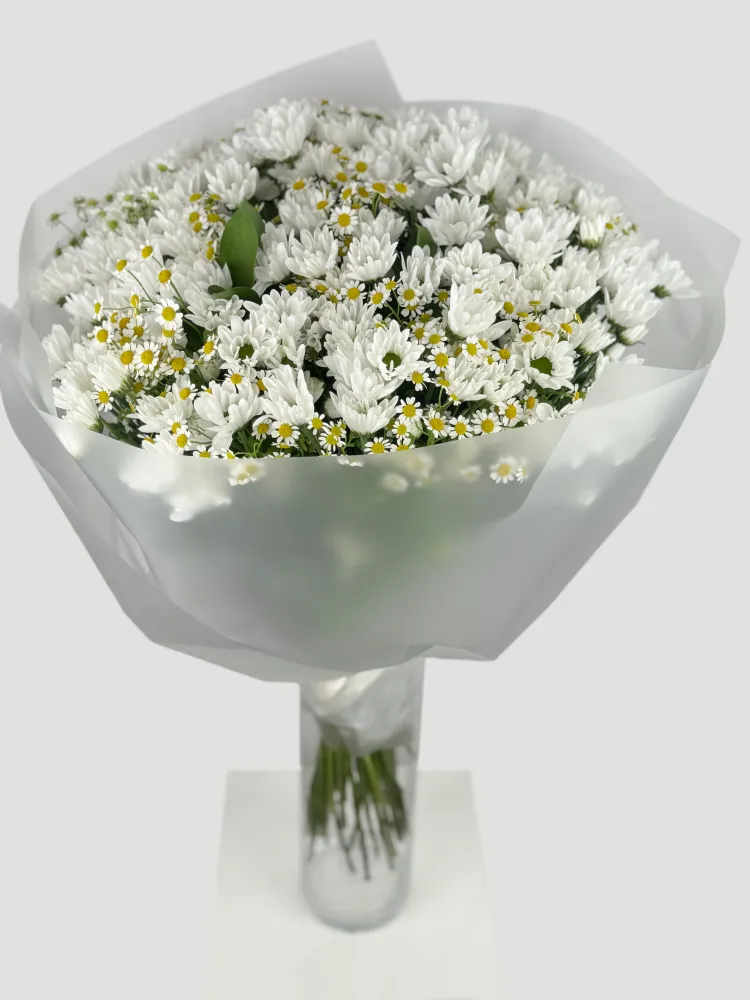
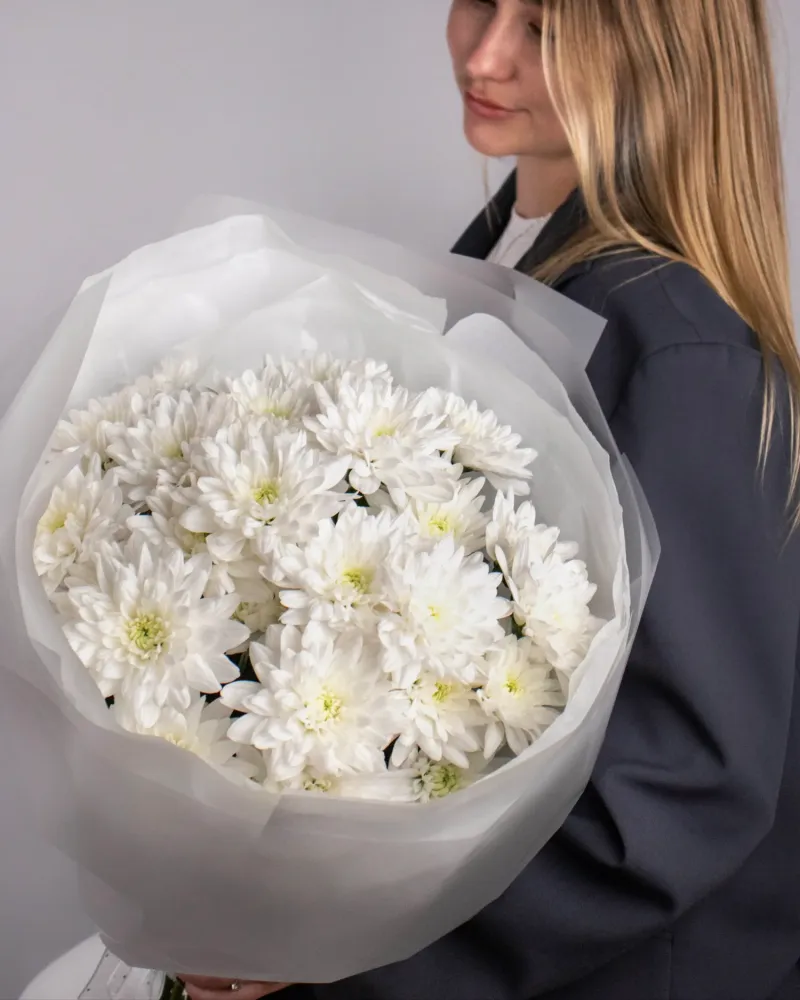
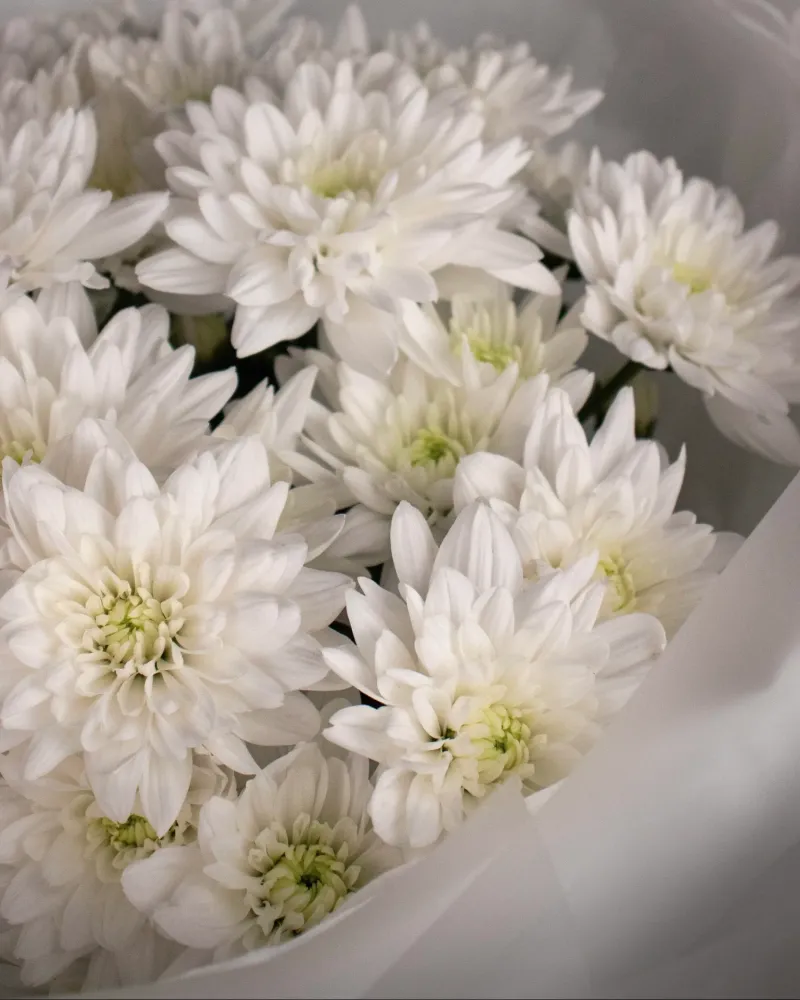
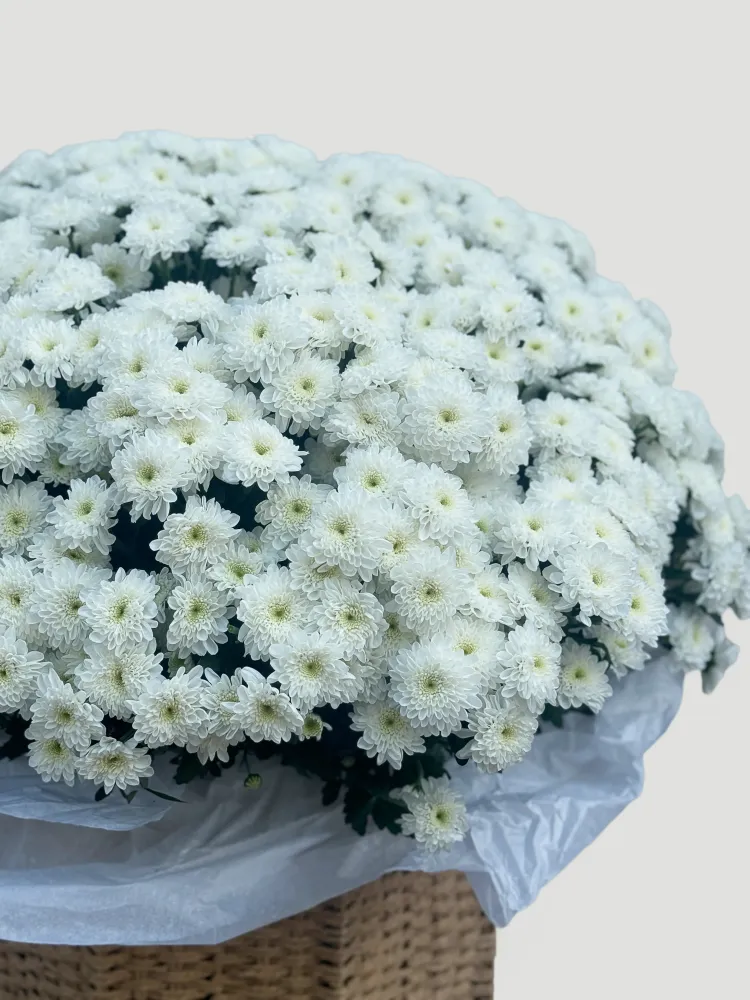
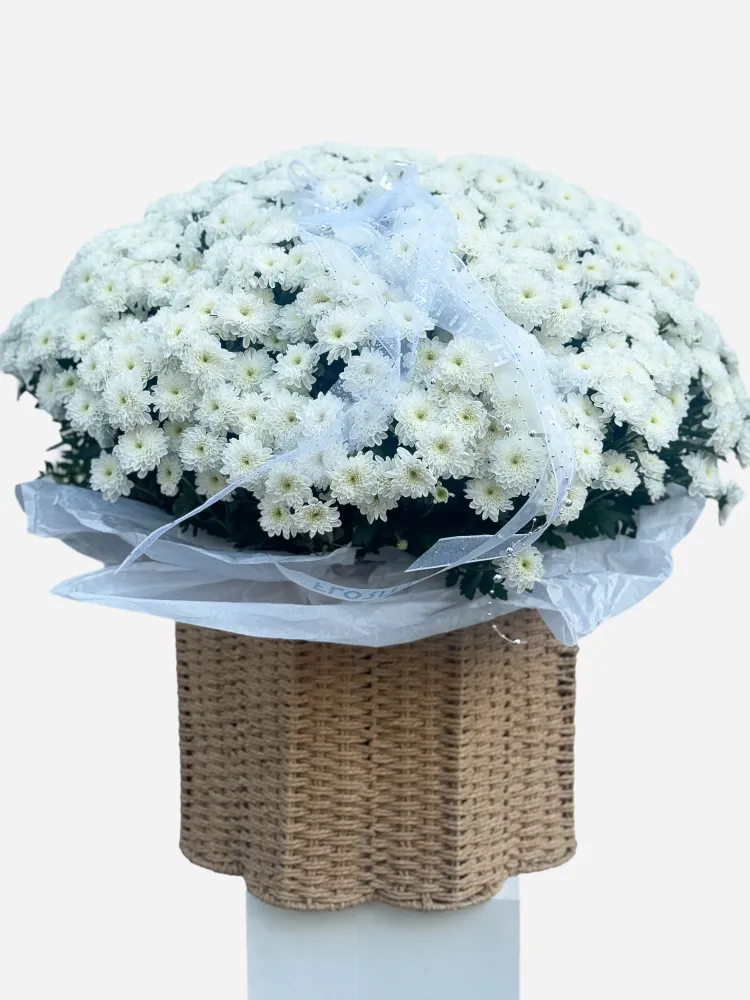
| Chrysanthemums | 14–21 days | Leaves left below the waterline | Fresh water every two days |
| Carnations | 14–21 days | Ripening fruit in the same room | Cutting above a stem node, not through it |
| Alstroemeria | 12–16 days | Spent blooms left on the stem | Pinching off finished florets |
| Orchids (cut stems) | 14–21 days | Cold draughts and sudden temperature swings | A steady room, out of direct sun |
| Eucalyptus and foliage | 14–21 days fresh | Nothing much — it is the toughest thing in the bouquet | Let it dry and it keeps indefinitely |
| Lisianthus (eustoma) | 10–14 days | Crushed stems in a tight vase neck | A wider vase so stems are not squeezed |
| Gypsophila | 10–14 days | Dry air; it browns before it wilts | Away from radiators |
| Lilies | 8–14 days | Buds opening all at once in a hot room | A cool spot — buds then open in sequence |
| Sunflowers | 6–10 days | Thick stems drinking a lot and running the vase dry | Topping up water daily, not every third day |
| Roses | 5–7 days, up to 10 for premium heads | An air lock in the stem after a dry spell | A fresh diagonal cut on arrival |
| Tulips | 5–7 days | Warmth — they open fully and finish | A cool room and shallow water |
| Peonies | 5–7 days from opening | Arriving already fully open | Buying them in bud so you get the opening days too |
| Ranunculus | 5–7 days | Hollow stems bending and kinking | Support from the other stems; do not over-trim |
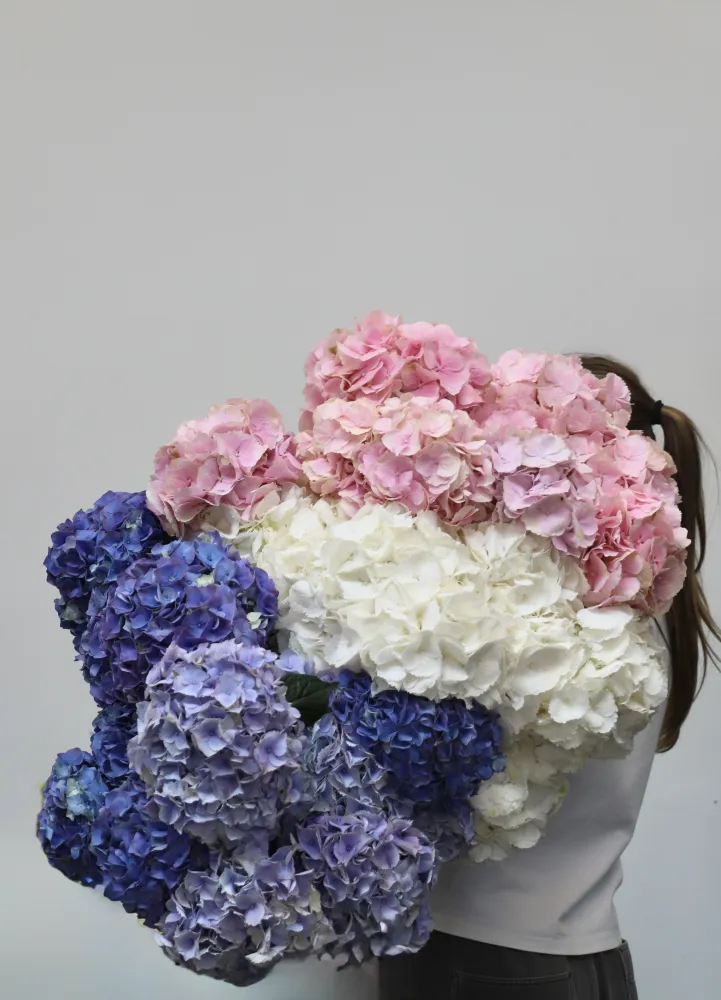
| Hydrangeas | 4–7 days | Drinking through the petals, not just the stem | Misting the head; a deep vase |
| Irises | 3–5 days | Each individual bloom lasts two days | Buying stems with two or three buds still closed |
Which cut flowers last the longest?
Chrysanthemums and carnations, by a clear margin — three weeks is normal for both if the water is changed. Both have a reputation in Britain as the cheap option, which is unfair and also useful: they are the reason a mixed bouquet still looks alive in week two after the roses have gone. Alstroemeria and cut orchid stems are close behind. If someone tells you they want flowers that last, and they mean it literally rather than as a compliment, that is the honest answer — not roses.
How long do roses last in a vase?
Five to seven days for a standard rose, and eight to ten for large-headed premium varieties, which is what we use in our rose bouquets. Two things decide which end you land on. The first is how recently the stem was cut before it went into water. The second is temperature: a rose in a room at 18°C will comfortably outlast the same rose at 24°C, and putting the vase somewhere cool overnight buys real extra days rather than a token improvement.
Why do roses wilt after two days when the rest of the bouquet is fine?
Almost always an air lock. When a cut stem sits out of water — in the box, in a car, on a kitchen counter while you look for the vase — air is drawn up into the channels that carry water, and a bubble forms. The rose then cannot drink no matter how full the vase is, and the head droops while the carnations next to it stay upright. The fix takes ten seconds: take the rose out, cut two centimetres off the bottom of the stem at a sharp angle, and put it straight back into water. Done early enough, the head lifts again within a few hours. Our post-delivery care guide goes through the rest of the first-hour routine.
Should you cut stems under water?
It helps, and it is not essential. Cutting under running water or in a bowl means no air can be drawn into the freshly opened stem at all, which is the whole point of the exercise. But the difference between cutting under water and cutting on a board and moving the stem into the vase within a few seconds is small. What matters far more is that the cut is diagonal, made with something sharp, and that the stem does not then sit around dry. Scissors crush; a knife or florist's snips cut. Crushed stem channels are a common and invisible reason a bouquet underperforms.
How long do flowers last without water?
Wrapped properly, four to six hours with no real harm, and up to about twelve if they are cool. This is the practical question behind most of the ones we are asked: flowers being carried across London, left in a car, or hidden overnight before a birthday. Cool is the whole answer. A boot in February is fine. A car in August is not — the inside of a parked car can pass 45°C, and an hour there costs days of vase life. If you have to hold flowers overnight before giving them, keep them wrapped, keep them somewhere cold, and put them in water only if you can hand them over in the vase.
Do radiators and hot weather really shorten vase life?
Yes, and it is the single biggest factor most people control without realising it. Warmth speeds up the whole process — the flower opens faster, drinks faster and finishes faster. The classic mistake is the mantelpiece above a working fire, or a windowsill in full sun, both of which are the two places people instinctively put a vase because that is where it looks best. Direct sunlight, a radiator underneath, and the top of a fridge or television all do the same thing. Somewhere shaded, out of a draught, and away from the heating will add days to almost any bouquet.
Does fruit in the room really matter?
It does, and this one surprises people. Ripening fruit gives off ethylene, a gas that tells flowers it is time to finish. A fruit bowl next to the vase measurably shortens the life of carnations, sweet peas and lilies in particular. Move the vase or move the bananas; either works.
Does flower food actually work?
Yes, and it does more than feed. The sachet is three things: a sugar for energy, an acidifier that helps the stem drink, and a small biocide that slows the bacteria which block stem channels. Of the three, the biocide does most of the work — most bouquets die from blocked stems rather than hunger. Use the whole sachet in the volume of water it is meant for, not a pinch, and use it again when you change the water. The home remedies do part of the job: a drop of bleach is roughly the biocide, a teaspoon of sugar is roughly the food, and lemonade is a poor version of both. None of them beat the sachet.
Why do tulips keep growing and bending after you put them in the vase?
Because they are still alive in a way most cut flowers are not. Tulips go on growing in the vase — two or three centimetres is normal — and they bend towards the light, which is why an arrangement that looked symmetrical in the evening is leaning by breakfast. It is not a fault and it does not mean they are dying. Turn the vase daily if you want them upright, keep the water shallow rather than deep, and keep them somewhere cool: warmth makes them open wide and finish early. Our tulip bouquets arrive deliberately tight for this reason.
Do peonies last longer if they arrive as buds?
Yes, and it is the reason we send them closed. A peony gives roughly five to seven days from the moment it opens, so a bouquet delivered in tight bud gives you the two or three days of opening as well — and the opening is the part people photograph. If they are stubborn, warm water and a warm room will speed them up; if you want to slow them down for a date, the fridge overnight works. Peonies are seasonal, so the varieties change through the year.
How long do hydrangeas last, and why do they wilt so suddenly?
Four to seven days, and they wilt faster than anything else of comparable price because they drink through the flower head as well as the stem. A hydrangea that has flopped is usually not finished — it is thirsty in a way that watering the vase cannot fix quickly. Mist the head, or in a bad case submerge the whole head in cool water for twenty minutes, and it will often come back completely. Use a deep vase and top it up daily; hydrangeas empty a vase faster than you expect.
What does the Floritta freshness guarantee cover?
Our flowers stay fresh for at least three days from delivery when the care instructions we supply are followed. If they wilt sooner than that, send us a photograph within those three days and we will replace the bouquet. This is in addition to your statutory rights. In practice the replacement conversation is short: a photo to our studio and we arrange a new delivery.
Everything we send is hand-tied in our own studio in south London and goes out the same day across the city, seven days a week, with orders accepted until 22:00; the rest of the UK is two to three working days by courier. Shorter time in transit is itself a vase-life factor, which is why a same-day London bouquet usually outlives one that has spent two days in a van. If you want the practical routine rather than the numbers, read our guide to caring for a bouquet after delivery, or browse the current bouquet range.