WhatsApp Chat
Short answer: white and cream flowers are always appropriate. The shape matters more than the flower — a tied sheaf or a wreath goes to the service, a hand-tied bouquet goes to the family's home. If you are not close family, send to the family's home after the funeral rather than to the service itself.
Most people order funeral flowers two or three times in their life, under time pressure, from a website they have never used before. The worry is almost never about taste. It is about doing something wrong at a moment when nobody wants to be asked to correct it. This guide is what we tell people who ring our studio and start with "I don't know what I'm supposed to send."
If you already know what you need, you can order funeral flowers from our Southwark studio straight away: a tied sheaf, the shape most people mean by a funeral bouquet, from £55; a wreath from £110; letters at £49 a letter. Tributes are made for same-day delivery in London. The rest of this guide is for when you are not sure yet.
Which flowers are traditional for a funeral in the UK?
There is no rule, but there is a shared language, and most British families read it the same way.
- Lilies — the flower most associated with British funerals. The white oriental lily means restored innocence and peace; its scent fills a room, which is why it is a service flower rather than a kitchen-table one. One caution that has nothing to do with etiquette: true lilies are seriously toxic to cats. If the flowers are going to a home with a cat, ask for a lily-free tribute — every florist can make one.
- White roses — reverence and remembrance. Red roses in a funeral tribute read as the love of a partner or a child, so they are usually kept for the closest family's own flowers.
- Chrysanthemums — in Britain a straightforward flower of mourning, and the backbone of most letter and cushion tributes because the bloom holds its shape for days.
- Carnations — long-lasting and inexpensive, which is why they carry the bulk of larger set-piece tributes. Pink for remembrance, white for pure affection.
- Gypsophila, freesia and stocks — the soft, scented fillers that keep a white tribute from looking severe.
If you want a single safe instruction to give a florist: white and green, no strong colour, no lilies if there is a cat. Nobody has ever been thought tasteless for sending that.
Wreath, sheaf, spray or posy — what is the difference?
This is the part that trips people up, because the words are specific and nobody uses them anywhere else. All of these are real, distinct products, and getting the shape right matters more than getting the flower right.
- Tied sheaf — flowers arranged flat, tied at the stems, designed to lie on the coffin or beside it. The most common choice for friends, colleagues and extended family. Ours run from £55 for a small sheaf to £120 for a large one.
- Wreath — a circle on a frame, the classic symbol of eternal life. Traditionally sent by close family or by a group such as a workplace or a club. From £110 for a 12-inch wreath; a full designer wreath in white sits around £199.
- Casket spray — the arrangement that sits on top of the coffin. Single-ended sprays cover part of the lid, double-ended sprays cover its length, and a full casket cover covers all of it. This is the family's flower and is almost never sent by anyone else. £150 to £320 depending on size.
- Cushion, heart and cross — solid, blocked shapes on a frame, from £110 to £190. Chosen for a particular meaning rather than a particular flower.
- Letter tributes — MUM, DAD, NAN, or a name spelled out letter by letter, £49 per letter. These are ordered by the immediate family; sending one as a friend is the single most common misstep we see, because it claims a relationship at the front of the service.
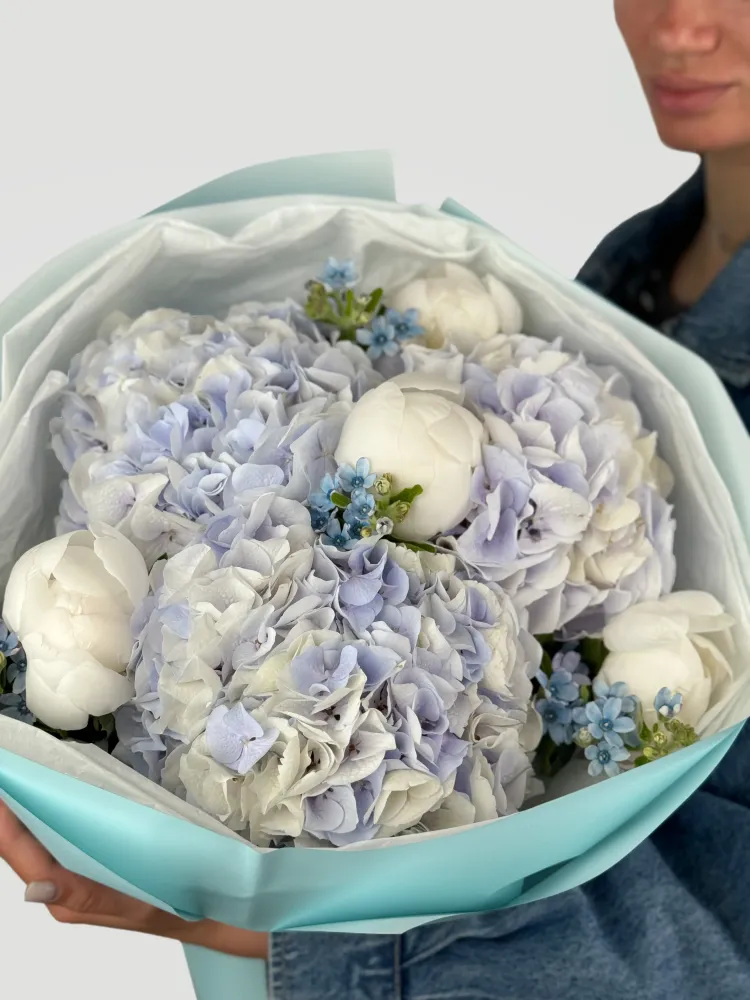
- Hand-tied bouquet — not a funeral shape at all. This is what you send to the family's home, in the days before or the weeks after.
Our full range of funeral tributes runs from £49 to £320, and every shape above is made by hand in our own studio in Southwark.
What colours are appropriate?
White is never wrong. Cream, ivory and soft green are equally safe, and a white tribute with plenty of foliage looks considered rather than plain.
Colour is a different decision, and it is the family's to lead. A great many British funerals are now explicitly celebratory — the notice will say "bright colours please", or the family will ask for a particular flower the person grew or loved. When you are told that, follow it: sending white to a funeral that asked for yellow reads as not having listened. When you are told nothing, white.
One quiet convention worth knowing: strongly perfumed flowers are best avoided in a small chapel or a family car, where a dozen tributes are together in a confined space.
Should you send flowers to the funeral home or to the family's house?
This is the question people most often get wrong, and the answer is simpler than it looks.
To the funeral director go the tributes meant to be at the service — sheaves, wreaths, sprays, letters. They should arrive the day before the funeral or by early morning on the day, not during it. Give the funeral director's address, and put the name of the person who died and the date and time of the service in the delivery notes: directors handle several families at once and match flowers by that name, not by the sender's.
To the family's home go bouquets and arrangements. These are usually better sent either in the first days after the death, when the house is full of people and practical help matters, or two or three weeks after the funeral, when everybody else has gone quiet. That second delivery is remembered far longer than one more tribute in a chapel.
If the death notice says "family flowers only" or "donations in lieu of flowers", respect it exactly. It means no tributes at the service. A bouquet to the home some weeks later is still welcome and is not a breach of the request — the instruction is about the funeral, not about the family.
Are flowers appropriate at every funeral?
No, and this is worth checking before you order rather than after.
At a Jewish funeral flowers are not traditional. The custom is to make a donation, to visit during shiva and to bring food to the house. Sending a tribute to the service is a well-meant mistake that the family then has to deal with.
At a Muslim funeral the tradition is simplicity and speed — burial usually within a day — and flowers are generally not part of it. Practice varies by family and community; if you are close enough to ask, ask.
At a Hindu or Sikh funeral flowers are used, often as garlands, and white is the colour of mourning rather than black.
At a humanist or celebration-of-life service anything goes and the family will usually say what they want.
When in doubt, the funeral director is the right person to ask, not the family. They answer this question every working day.
What words do you put on funeral flowers?
Short is better than clever. Write it as you would speak it, sign with your full name and, if the family may not place you immediately, say how you knew the person.
- With deepest sympathy from all of us at [company].
- Thinking of you and your family. — [name], [how you knew them]
- In loving memory of a wonderful friend.
- Words are not enough. We are here whenever you need us.
- Rest in peace, [name]. You will be very much missed.
Avoid anything that instructs the reader how to feel, and avoid religious language unless you know the family shares it.
How quickly can funeral flowers be delivered in London?
We take orders until 22:00 every day for same-day delivery across London, seven days a week, and you can choose a delivery window at checkout. Tributes built on frames — sheaves, wreaths, letters and casket sprays — go to London addresses only, because they do not survive a courier box. Outside London, send a sympathy bouquet to the family's home instead: bouquets reach mainland England, Wales and Scotland in 2–3 working days.
Two practical notes. Set-piece tributes — wreaths, letters, casket sprays — are built by hand on frames, so give us as much notice as you can and always tell us the service time rather than just the date. And if the flowers are going to a home rather than to a service, a sympathy bouquet can be sent the same evening without any of this planning.
Questions we are asked
Is it appropriate to send flowers to a funeral in the UK?
In most cases yes — flowers are the standard way of marking a death in Britain, and a tribute sent by a friend, neighbour or colleague is expected rather than intrusive. The exceptions are a notice asking for "family flowers only" or "donations in lieu", and Jewish and Muslim funerals, where flowers are not customary. If you are unsure, the funeral director will tell you in one phone call.
How much should you spend on funeral flowers?
As a friend, colleague or member of the wider family, a tied sheaf or a sympathy bouquet between £50 and £120 is entirely normal in London, and nobody counts. Inexpensive funeral flowers do not have to look modest: a small tied sheaf is £55 and a white rose honour spray is £49, and both read as considered rather than cheap. Larger set pieces — wreaths, letter tributes, casket sprays, £110 to £320 — are usually ordered by the immediate family or shared between a group of colleagues. Spending more than the family has does not read as generosity.
Can you send funeral flowers on the same day in London?
Yes. Sympathy bouquets and arrangements can be ordered until 22:00 for delivery the same day anywhere in London, seven days a week. Hand-built tributes on frames — wreaths, crosses, cushions and letters — need more notice, so order those as soon as you have the service date. Outside London we send bouquets only, in 2–3 working days — tributes on frames are delivered in London.
What flowers should you avoid sending to a funeral?
Avoid red roses unless you are the partner, child or parent of the person who died — they read as a declaration of a very particular kind of love. Avoid heavily scented flowers when many tributes will be together in a small chapel. Avoid lilies if the flowers are going to a house with a cat, as they are seriously toxic to them. And avoid letter tributes such as MUM or NAN unless you are immediate family.
Do you send flowers to the family's home or to the funeral director?
Tributes for the service go to the funeral director, the day before or early on the morning of the funeral, with the name of the person who died and the service time in the delivery notes. Bouquets and arrangements go to the family's home, and are often most welcome two or three weeks after the funeral rather than in the first week, when everyone else has already sent theirs.
What flowers do you send when someone dies?
It depends on where the flowers are going. To the service: a white tribute such as a tied sheaf or a wreath, addressed to the funeral director. To the bereaved at home: a hand-tied bouquet or an arrangement in a vase in white, cream or soft green — white roses, lilies, chrysanthemums and freesia are the flowers most often chosen for a bereavement in Britain. If you do not yet know the family's wishes, the bouquet to the home is always a safe first step, and our sympathy flowers go out the same day across London.
What is the difference between funeral flowers and sympathy flowers?
Funeral flowers are the tributes seen at the service — sheaves, wreaths, sprays, letters — and they are addressed to the funeral director. Sympathy flowers are sent to the bereaved themselves, usually as a hand-tied bouquet or an arrangement in a vase, and they can arrive at any point in the weeks before or after the funeral.
If your hesitation is less about which flowers and more about whether it is your place to send anything at all, we wrote a separate guide to the situations where people are not sure they should send flowers — grief, hospital wards and the weeks after a funeral among them.