WhatsApp Chat
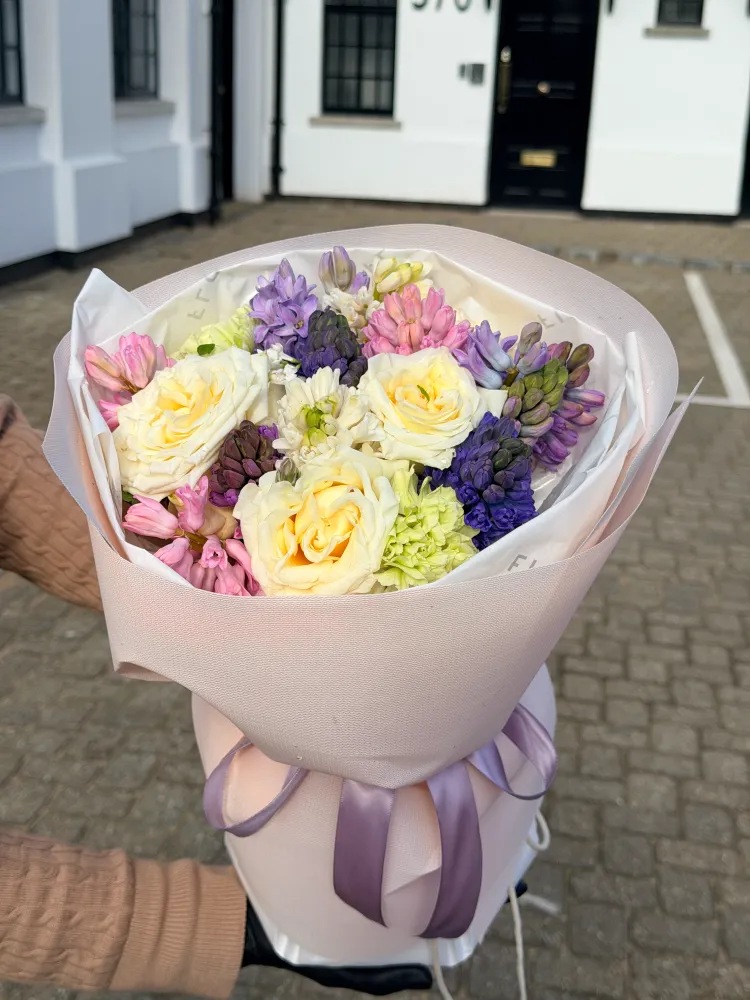
Short answer: January is a bulb month. What is genuinely British and in season is forced narcissi from Cornwall and the Isles of Scilly, forced tulips, hyacinths, paperwhites and amaryllis, hellebores, and cut woody stems — pussy willow, catkins, dogwood and witch hazel. Everything soft and colourful in a January bouquet was grown under glass or flown in.
January reverses the usual rule. For most of the year the British list shrinks as you move indoors; in January it grows, because the bulb crops that were planted for exactly this month start arriving. It is the first month since October when something new comes into season rather than going out of it.
What is actually in season in the UK in January?
The honest British list: narcissi from the far south-west, forced tulips, hyacinths, paperwhites, amaryllis, anemones from covered ground, the first ranunculus at the very end of the month, hellebores, and glasshouse chrysanthemums, which carry on quietly all winter.
Alongside that there is a woody list that matters more in January than in any other month, because it is what gives an arrangement height and line when the flowers are all short-stemmed: pussy willow, hazel catkins, dogwood in red and orange, birch, contorted willow, and witch hazel, which is the only thing outdoors in Britain in January with real scent.
Are British daffodils really a January flower?
Yes, and this is the fact most people find surprising. The Isles of Scilly and the Cornish coast are mild enough to crop narcissi outdoors through the winter, and the first Tazetta types — the small multi-headed, strongly scented ones — are cut from around Christmas. By the middle of January the mainland Cornish crop is running, and by the end of the month Lincolnshire has started under cover.
So a bunch of British daffodils in January is not a glasshouse trick. It is the genuine start of the British flower year, roughly eight weeks before the country notices spring. They are cut in tight bud on purpose, and they open within a day or two indoors.
One practical warning that comes with them: daffodil stems leak a sap that shortens the life of everything else in the vase. Give them their own container for the first several hours, or keep them on their own altogether — which is how they look best in any case.
What about forced bulbs and amaryllis?
The forced-bulb season that starts in late November runs right through January, and this is its best month. Amaryllis is at full stretch, hyacinths are in pots and in flower, and paperwhite narcissi are still coming.
All three are sold as growing plants rather than cut stems, which makes them the sensible choice for a January gift: a bulb in a pot is doing something for six weeks, in a month when a cut bouquet in a heated room is doing well to last ten days. What we have at any moment is in plants.
Are tulips in season in January?
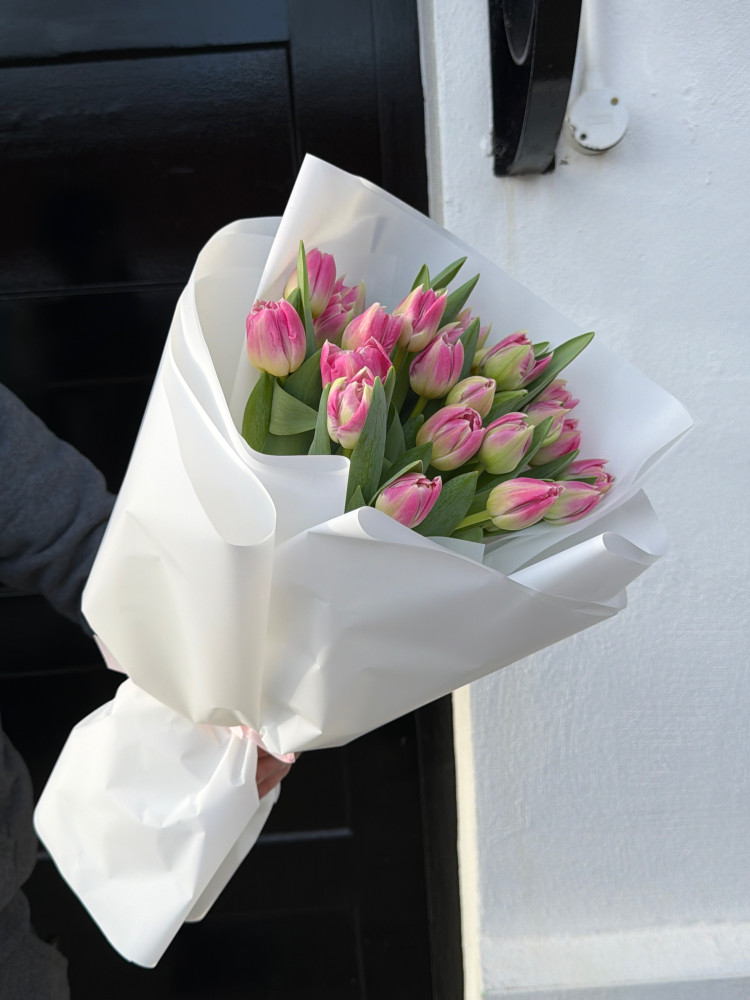
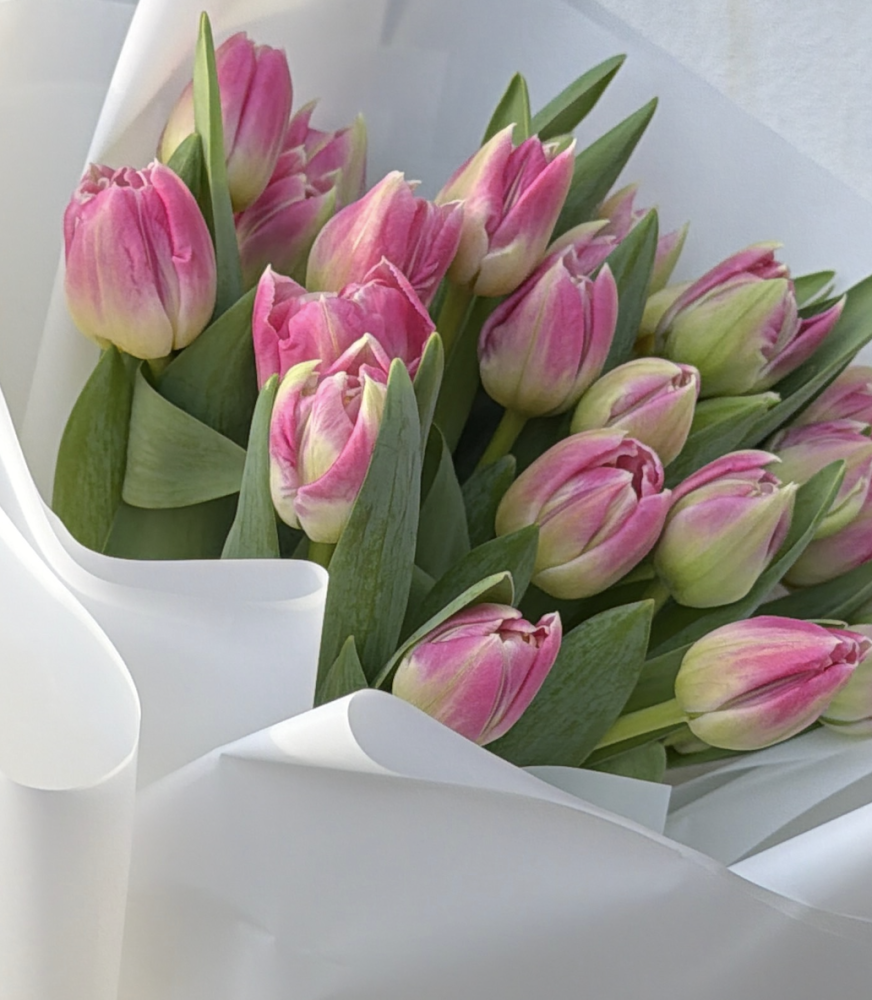
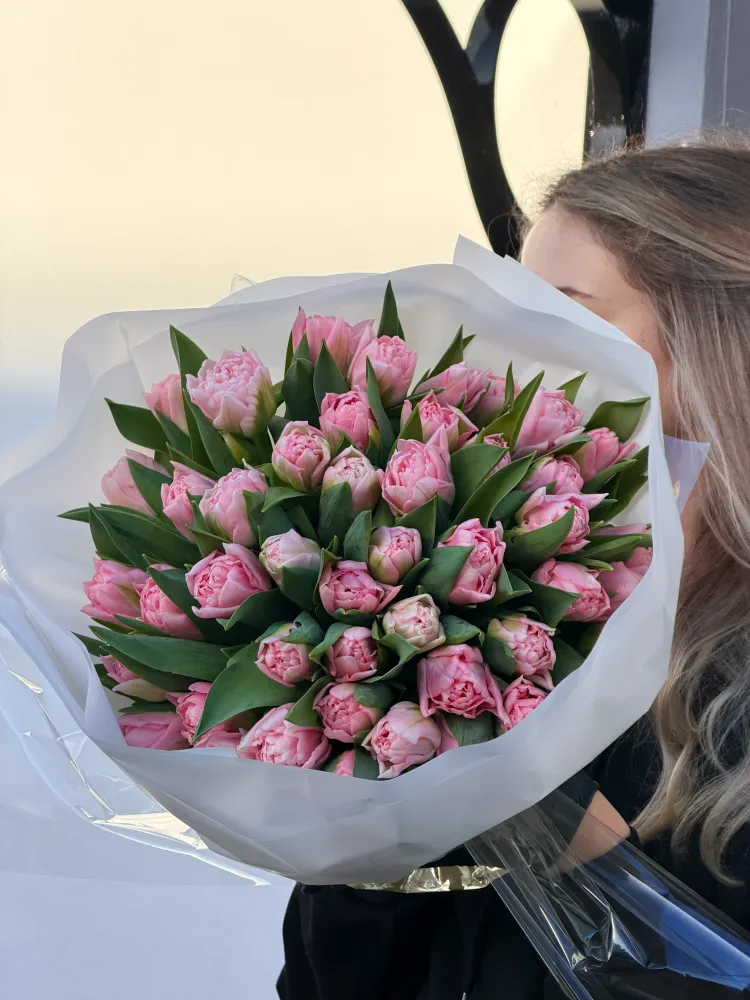
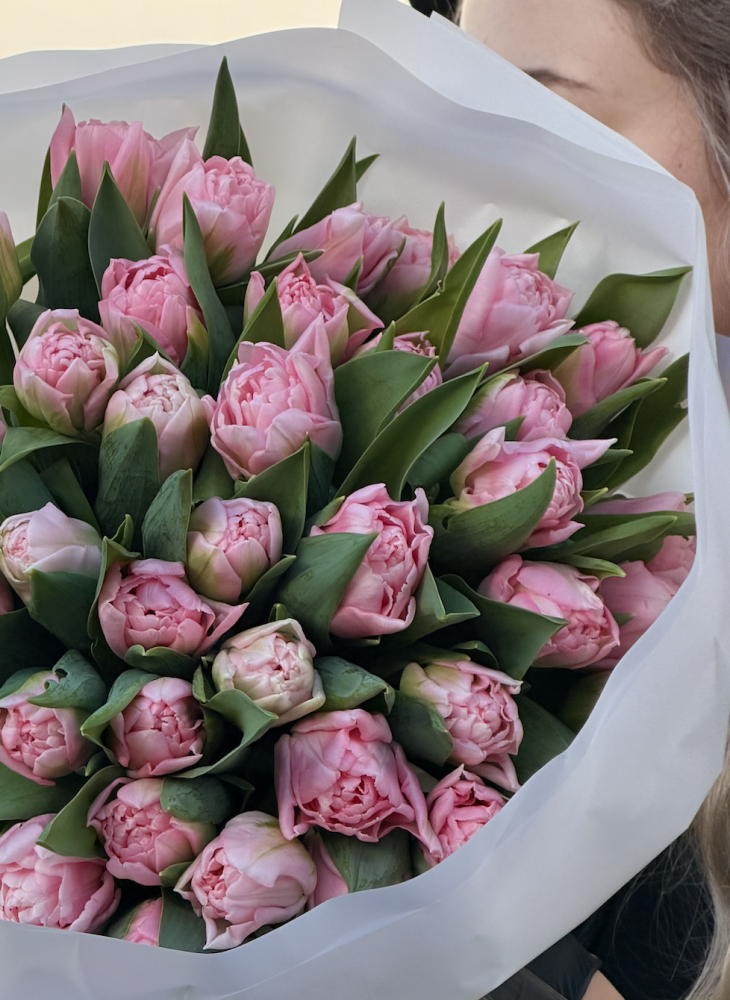
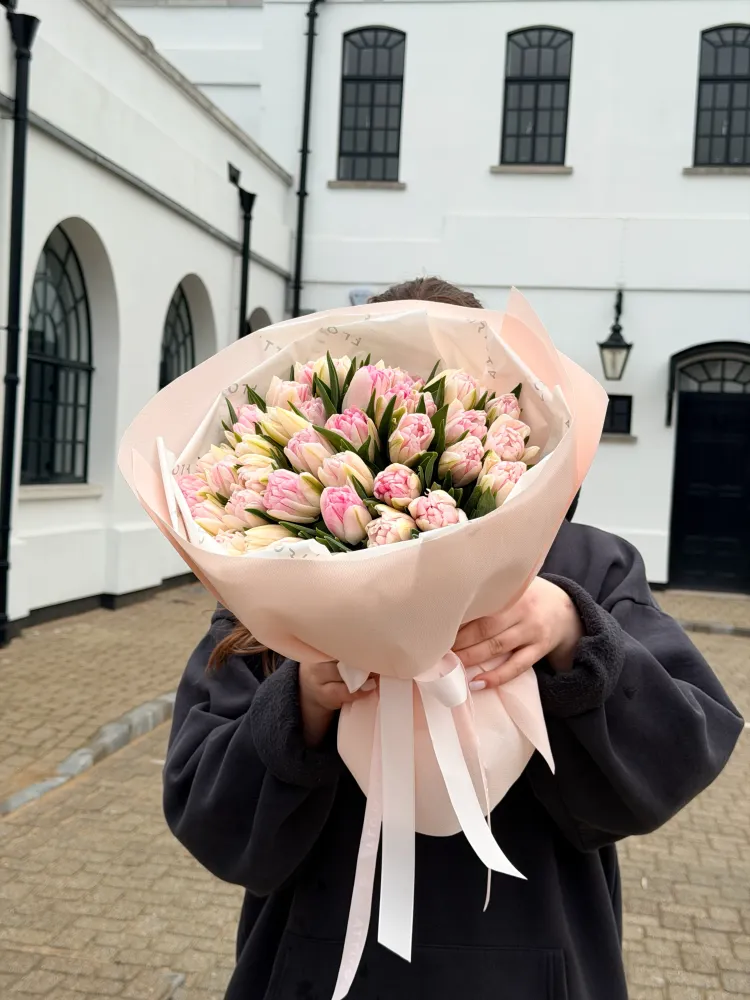
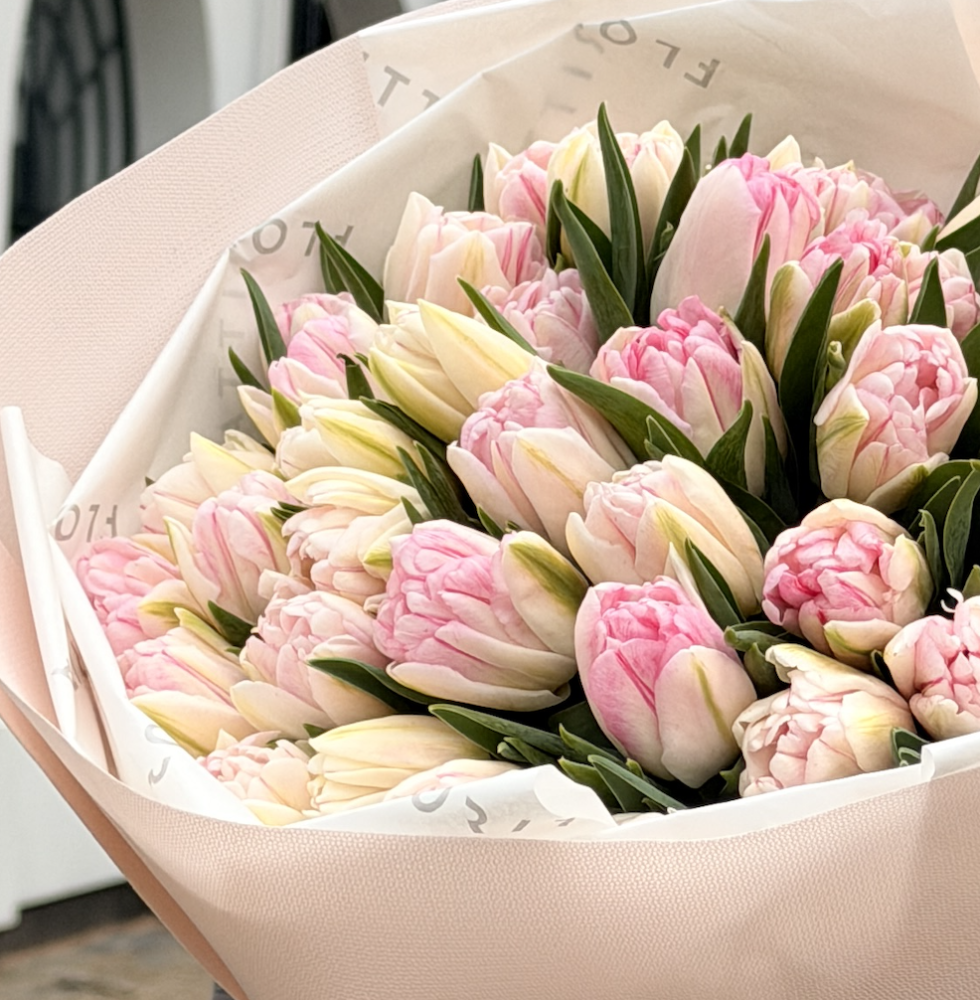
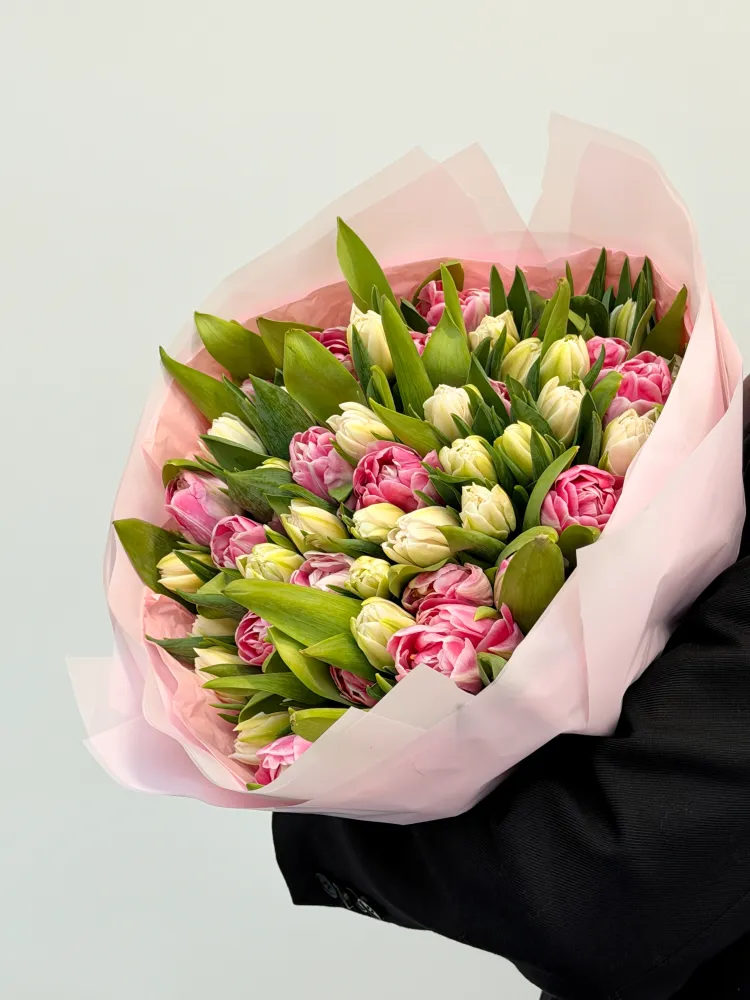
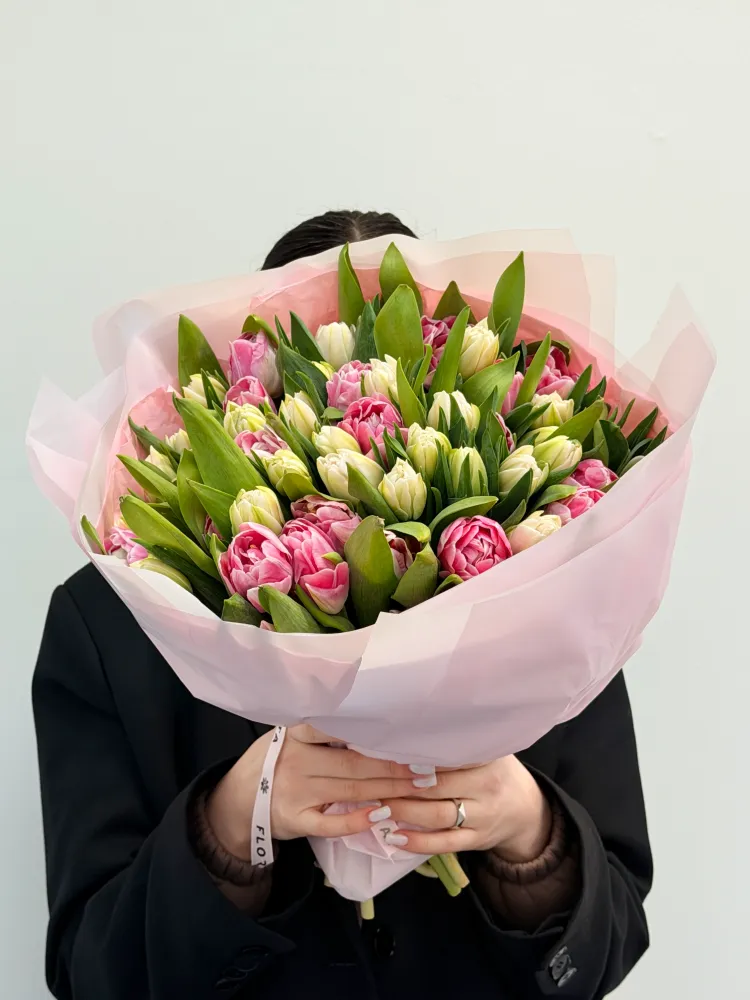
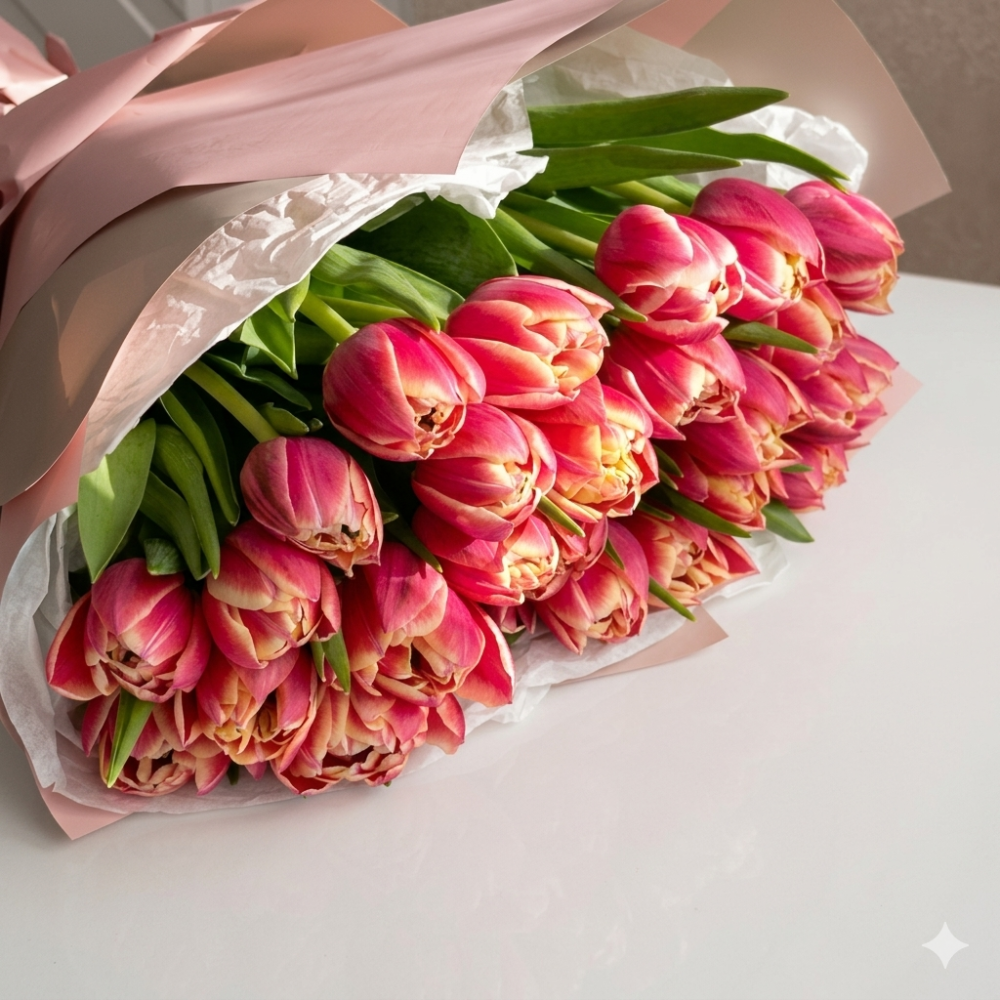
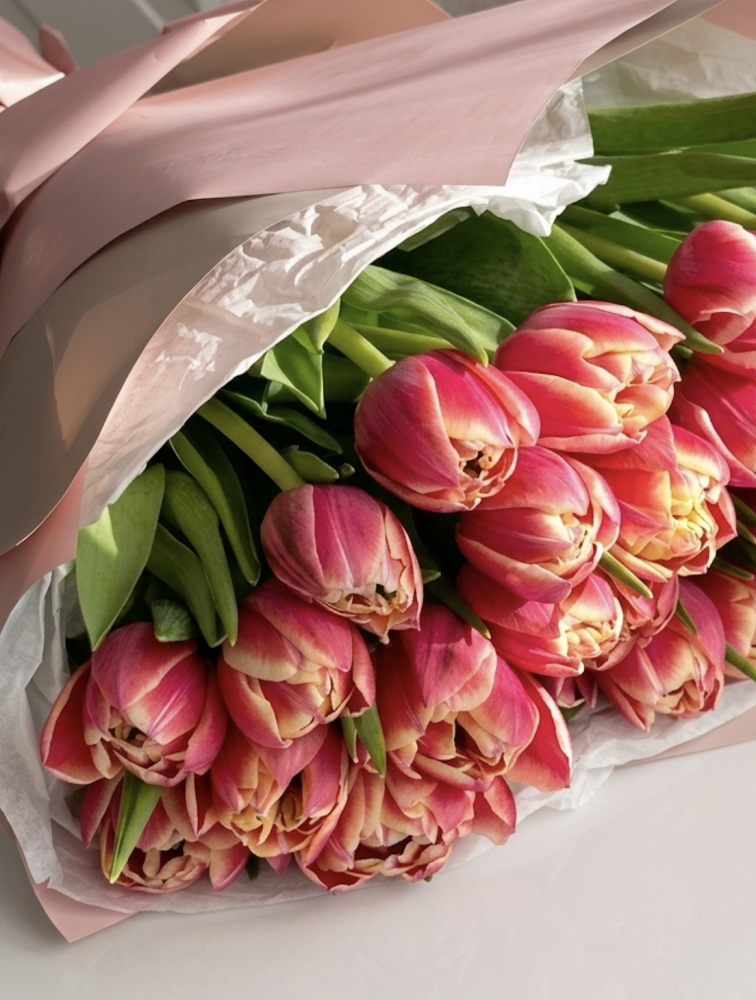
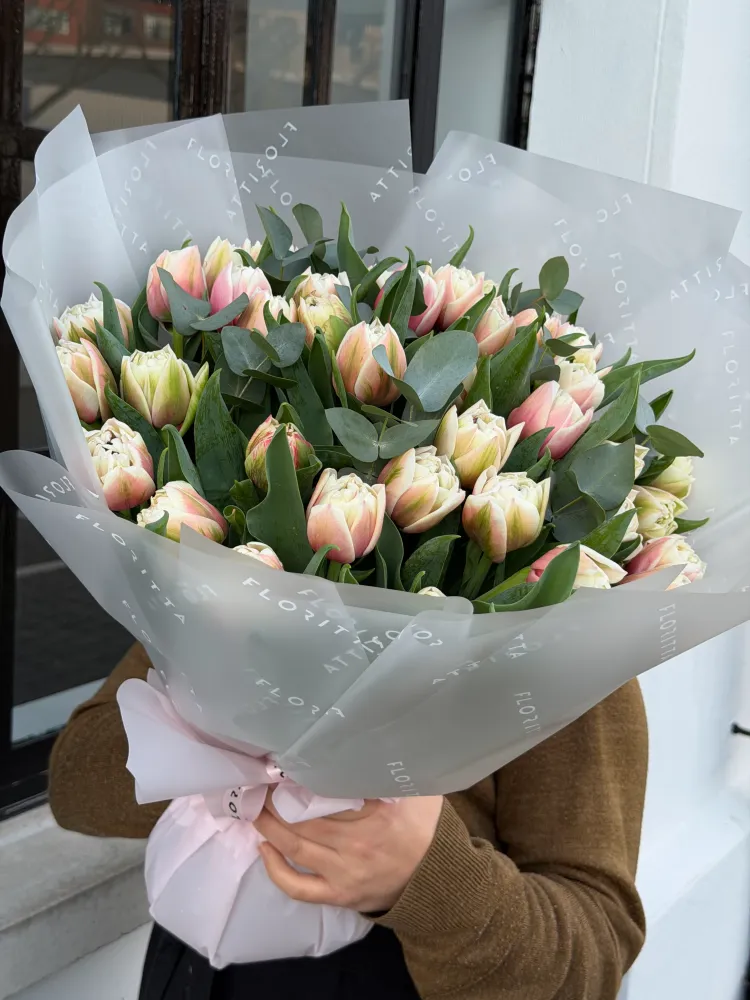
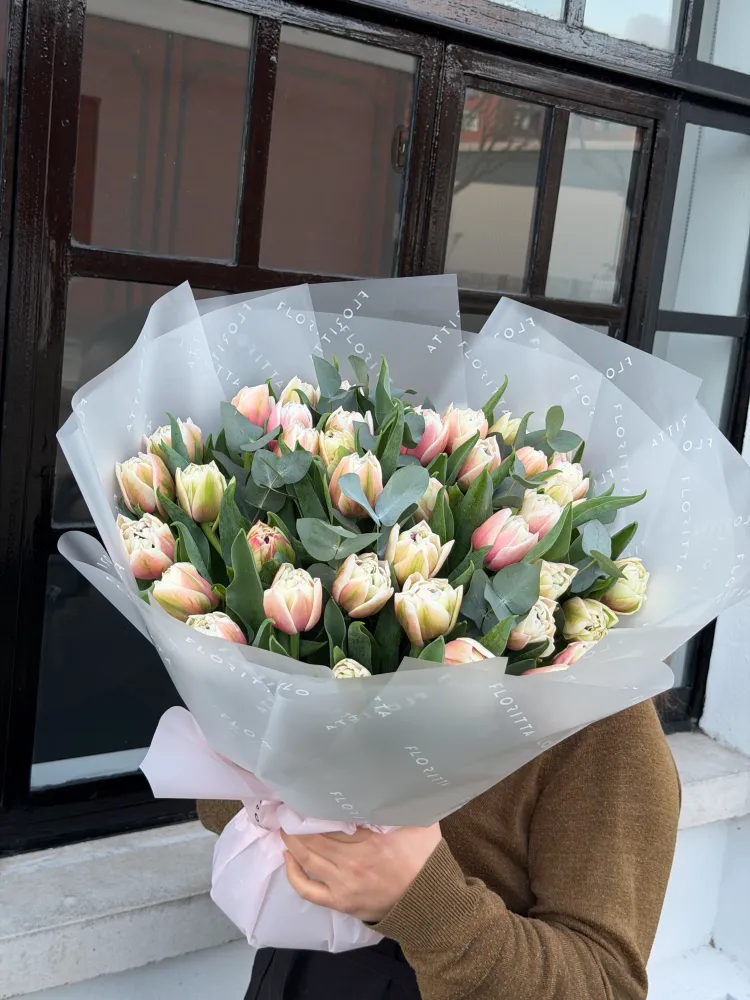
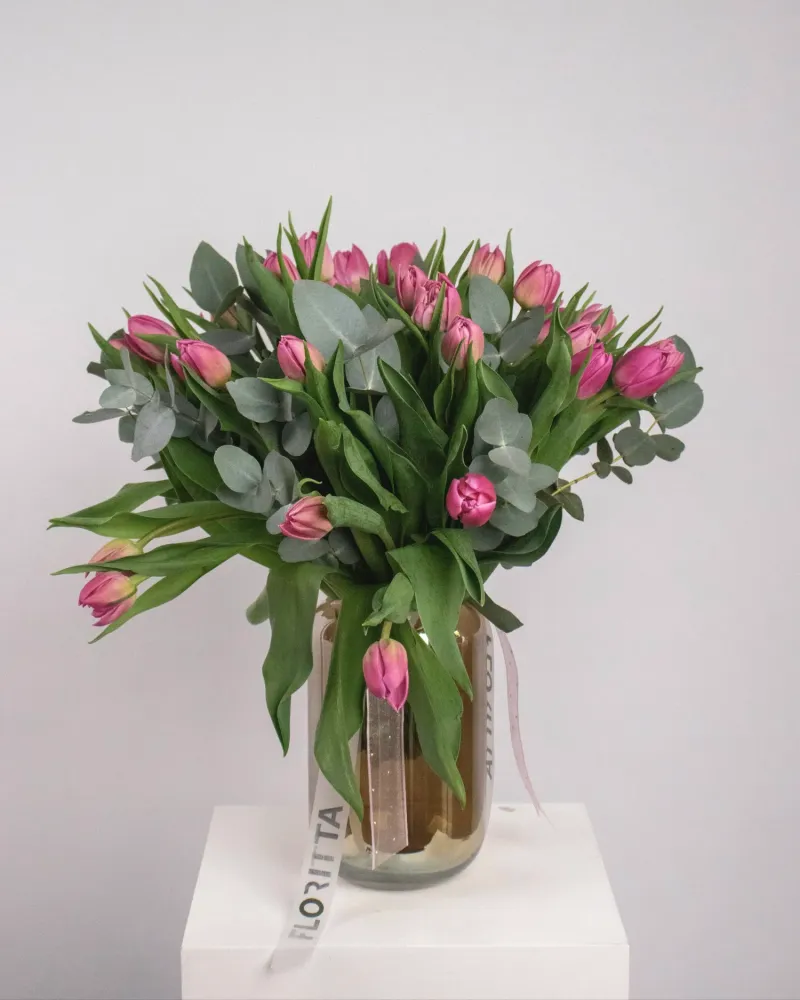
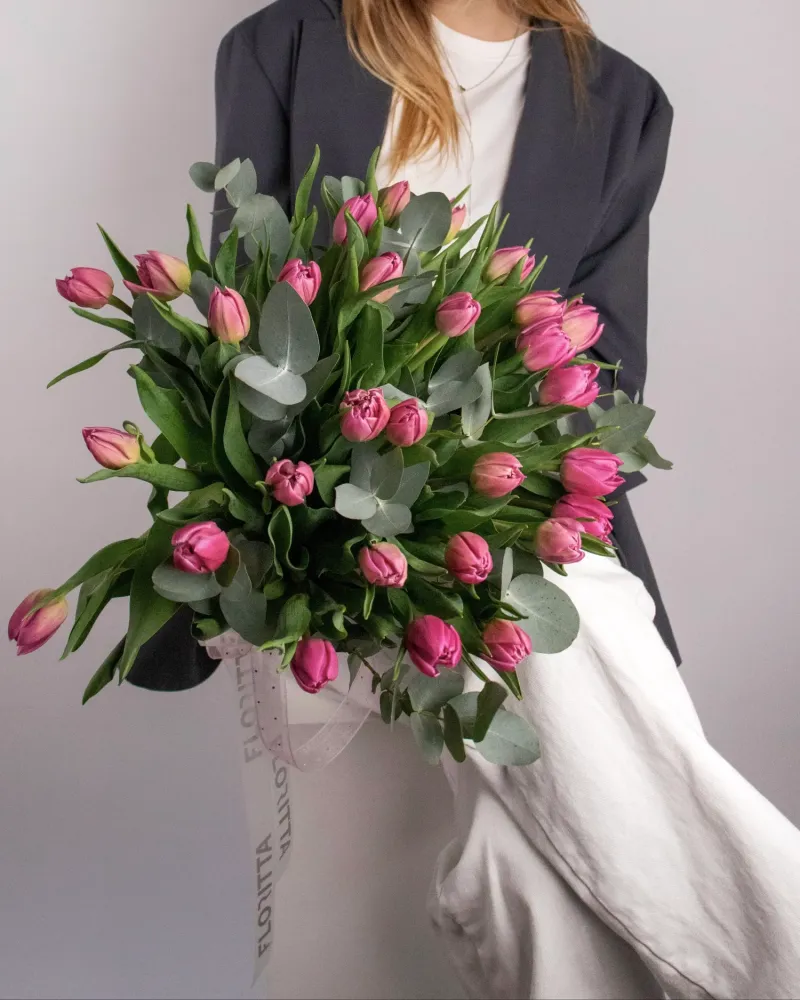
British forced tulips start in January and build through February and March, so yes — but they behave differently from the ones you will buy in April. January tulips are grown under glass, they are cut young, and they keep growing in the vase, sometimes by several centimetres, which is why an arrangement that looked balanced on Monday leans by Thursday.
That is normal, not a fault, and it is manageable: cool water, a tall enough vase to support the stems, and no radiator nearby. Our tulips are the closest thing to a British seasonal flower we can offer for most of the winter.
What is flown in during January?
Roses, lisianthus, alstroemeria, lilies, gerbera, orchids and most of the year-round mixed material — from Kenya, Ecuador, Colombia and the Dutch auctions. Southern-hemisphere peonies from Chile and New Zealand finish in January, and after that there are none anywhere in the world until the European season starts in spring.
If peonies are the point of the gift, January is the last month to ask for them and the first month of a five-month wait. Everything we know about that season is in peonies.
Which January flowers last longest in a heated flat?
The heating is the whole problem in January. A room at 22°C roughly halves the vase life you would get in an unheated hallway.
What copes: chrysanthemums, carnations, alstroemeria, potted bulbs, and woody stems, which do not really mind. What suffers: tulips, which stretch and flop; anemones, which open fully and finish quickly; and anything soft and imported. Keep the vase off the windowsill at night, since the cold behind a curtain is as hard on flowers as the radiator in front of it, change the water every second day, and read the timings in how long flowers last as a cool-room figure rather than a warm-room one.
If the room is the problem rather than the flowers, the honest answer for January is a plant. A potted orchid flowers for eight to twelve weeks in a heated flat and, cut back to a node when the last bloom drops, usually pushes out a new spike later in the year; cut orchid stems sit in between at two to three weeks in water. Neither is a British seasonal flower, but in the month when everything soft-stemmed is flown in and short-lived, that is the trade most people would rather make — see orchid plants.
What can you cut from a British garden in January?
More than the month suggests, and it is worth knowing because it is what a good January arrangement is built on. Ivy, in leaf and in berry. Eucalyptus, which grows perfectly well in this country and is cut here all year — see eucalyptus. Winter honeysuckle and viburnum, both scented. Hellebores, if you sear the stem ends. Dogwood and willow for colour and line, and hazel catkins from the middle of the month.
None of that is filler. In a month with short flowers and a low sun, the structure is what the arrangement is actually made of.
When should you order flowers for February?
For the 14th of February, order in the first week of the month if you want a specific flower or a specific delivery window — the whole industry is working to one date, and the good material is committed early. For any other February date, the usual notice is enough: we deliver across London seven days a week, same-day on orders placed before 22:00.
What is in the buckets in February, and why the roses on that one day are a global crop rather than a British one, is in what is in season in February. The month just gone is in what was in season in December, and if you are already thinking about the 14th, the range is in Valentine's Day flowers.