WhatsApp Chat
Short answer: February is the best British month of the winter. Daffodils from Cornwall and Lincolnshire are in full flow, forced tulips are building, and anemones, ranunculus, hellebores, hyacinths and blossom branches are all cut here. The exception is the one day everyone buys flowers: Valentine's roses are a global crop, and almost none of them are British.
Two completely different things happen in February. For twenty-seven days it is the quiet start of the British spring, cheap in season terms and generous in choice. For one day it is the busiest date in the flower calendar, working almost entirely on imported roses. It helps to know which of those two Februaries your order belongs to.
What is actually in season in the UK in February?
The British list: narcissi and daffodils in quantity, forced tulips, anemones, the first ranunculus, hellebores, hyacinths and other forced bulbs, early blossom branches — cherry, blackthorn, quince — brought on indoors, pussy willow, catkins, and glasshouse chrysanthemums.
That is a real list, and it is the first one since the autumn that gives you colour rather than structure. February is when British flowers stop being a matter of berries and stems and start being flowers again.
Are Valentine's roses ever British?
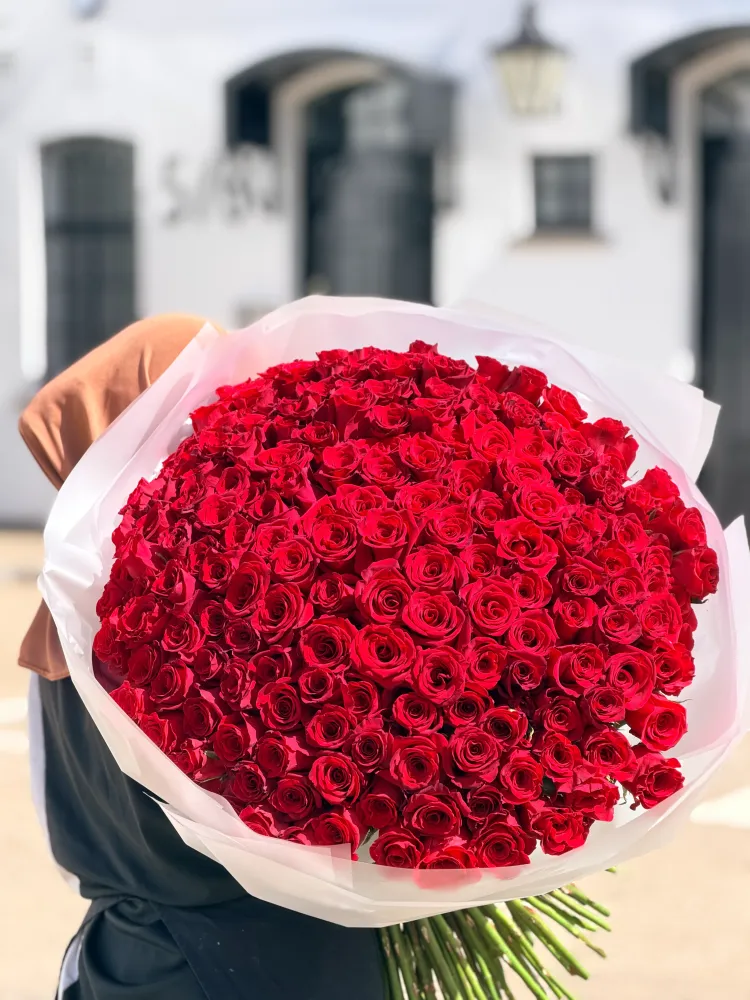
Almost never, and it is worth saying plainly. There is no commercial British rose crop in February — the outdoor season here runs from roughly June to October, and glasshouse rose growing at that scale left this country decades ago. Roses sold anywhere in Europe on the 14th of February come from Kenya, Ethiopia, Ecuador or Colombia, usually through the Dutch auctions, and they were cut a week or so before they reach a vase.
None of that makes them a poor flower — the equatorial crop is grown at altitude and the heads are larger and firmer than a British summer rose ever gets. It just means that on this one date, "seasonal" and "romantic" are pulling in different directions, and anyone telling you their Valentine's roses are locally grown is telling you something that is not true. Ours are in roses, and the Valentine's range is in Valentine's Day flowers.
Is it worth choosing something other than roses for Valentine's Day?
On the merits of the flowers, yes, and February is the month where that is genuinely true rather than a way of talking you out of what you wanted.
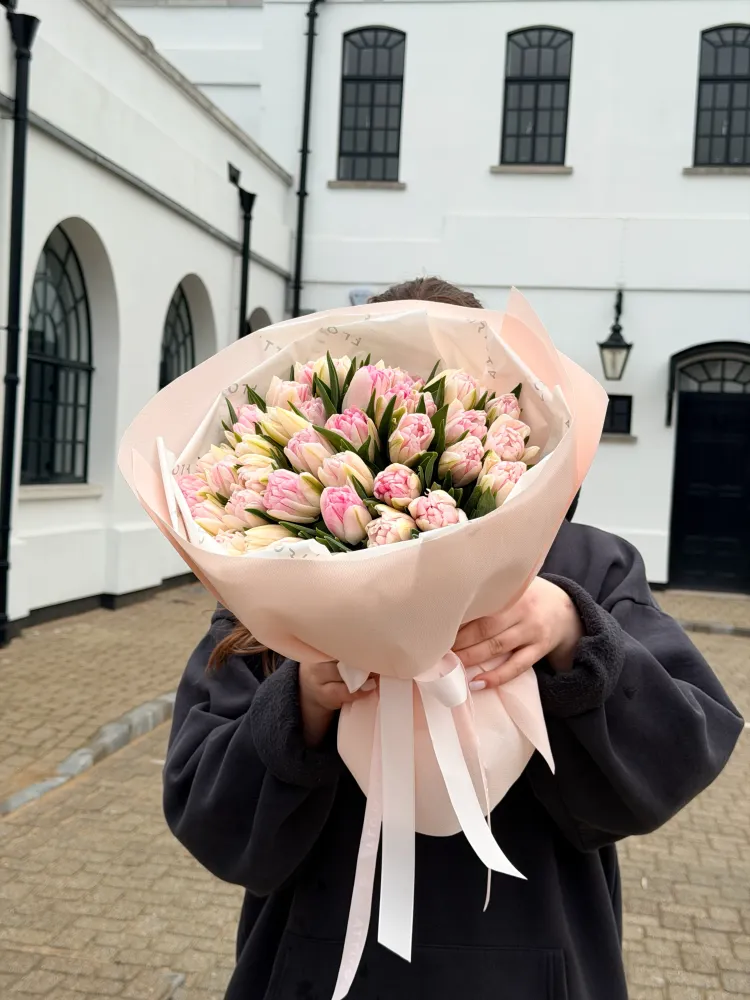
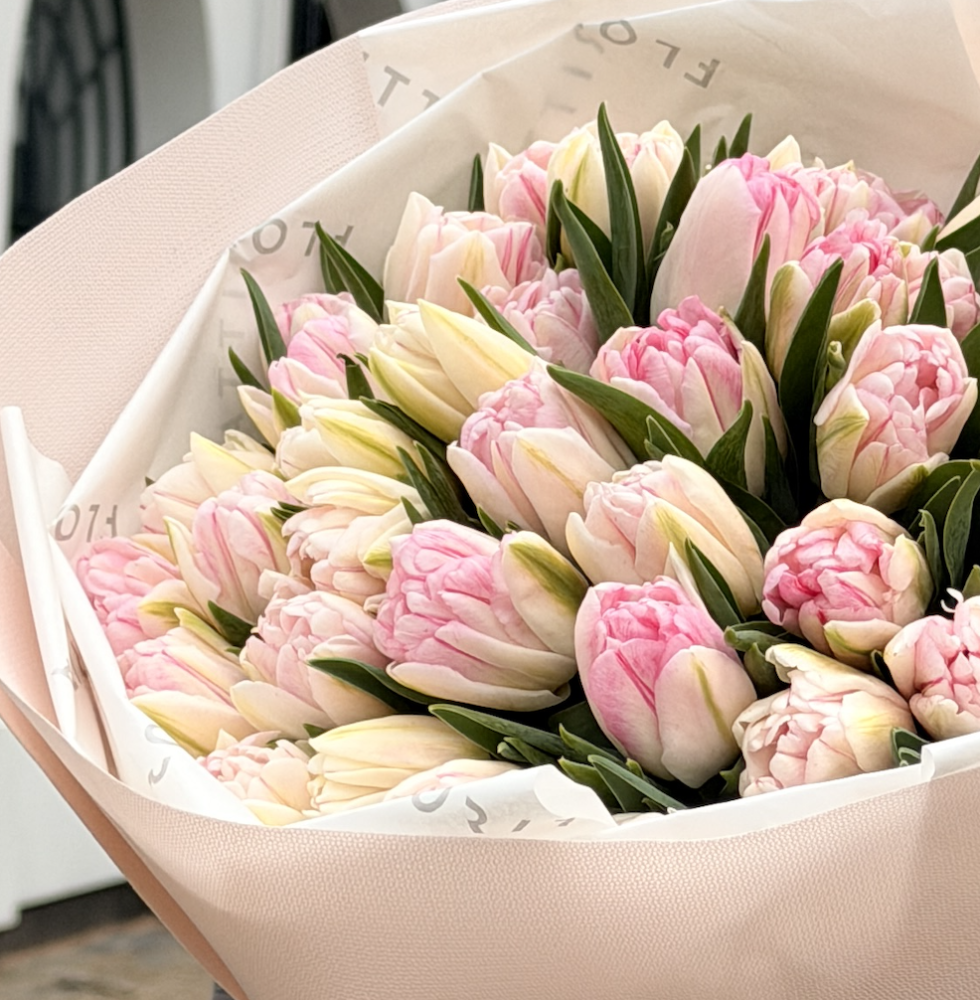
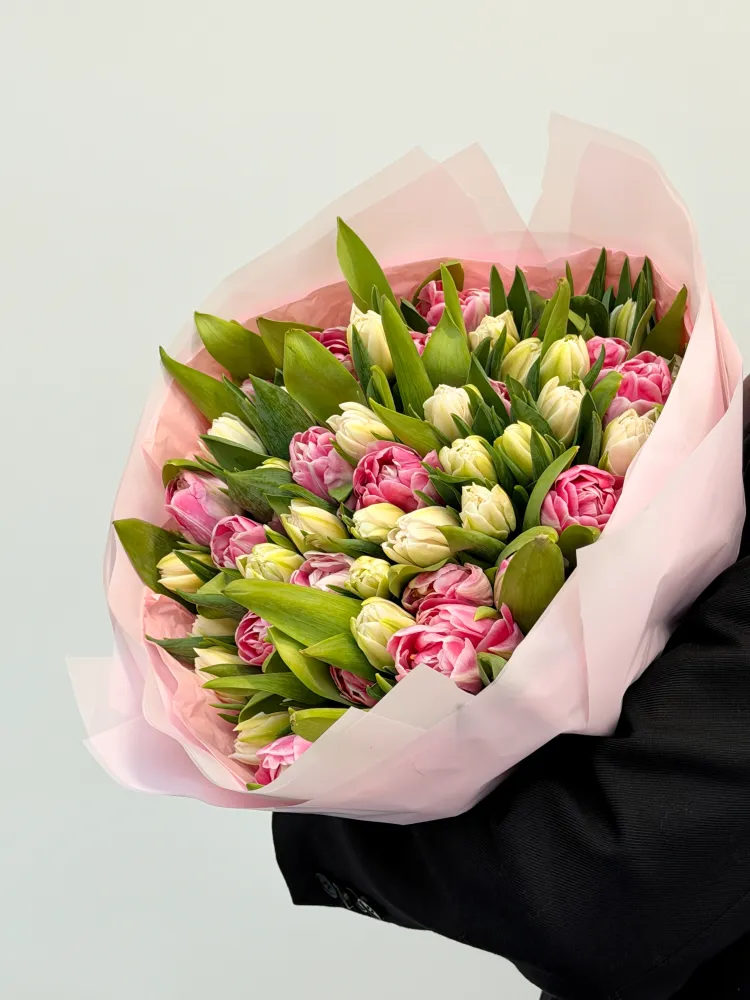
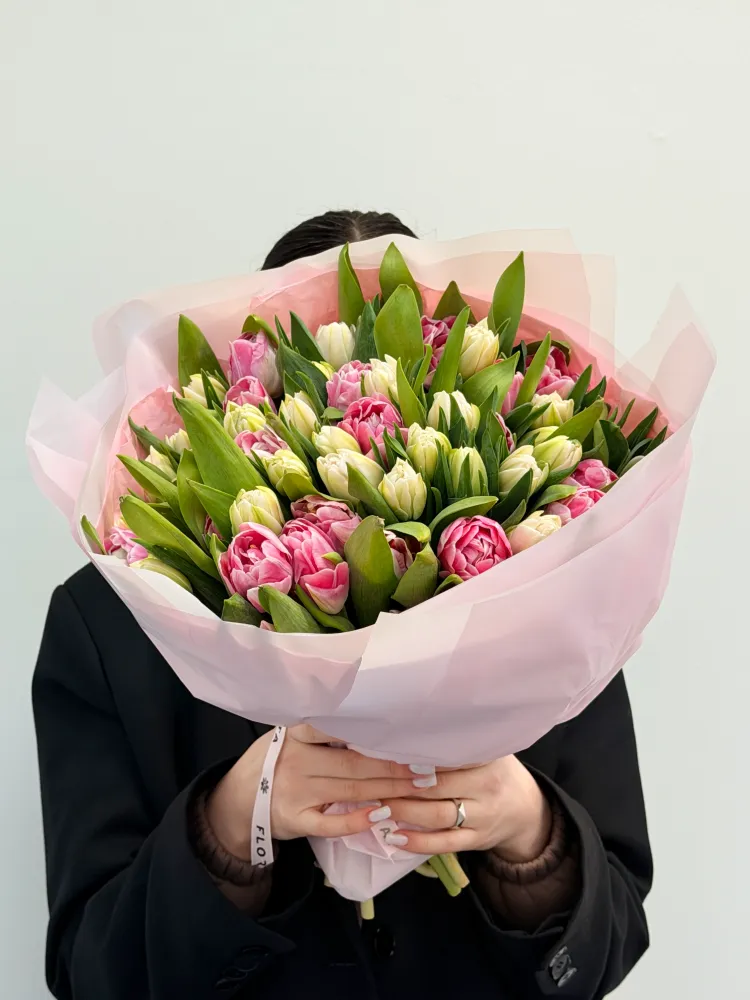
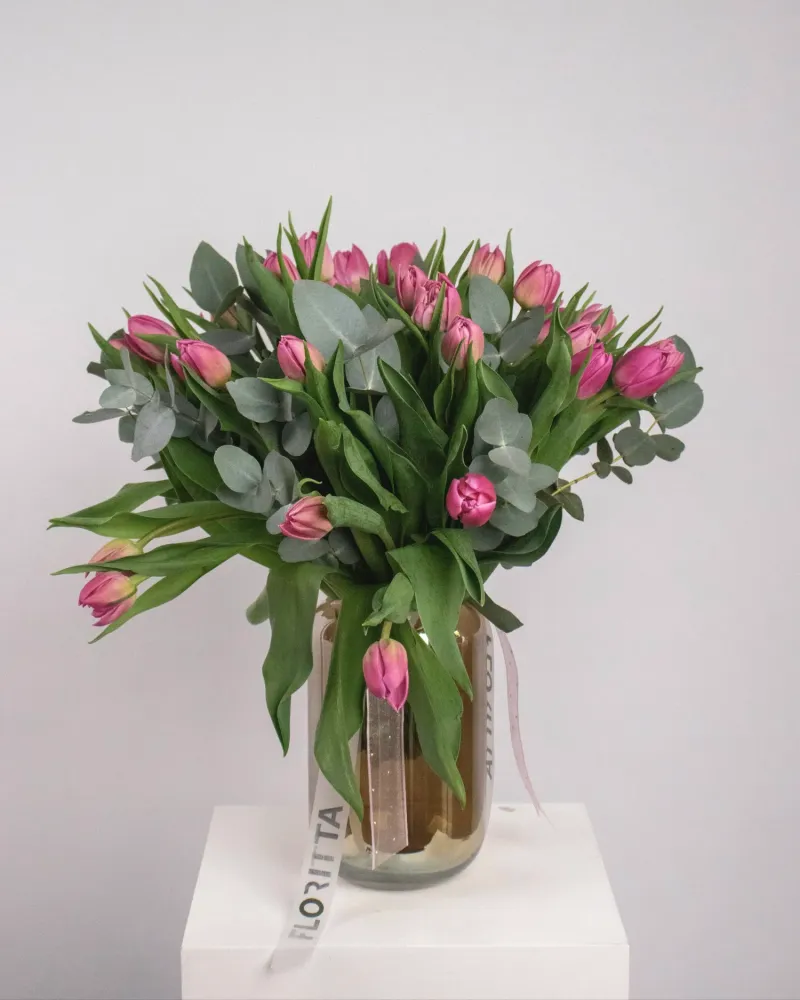
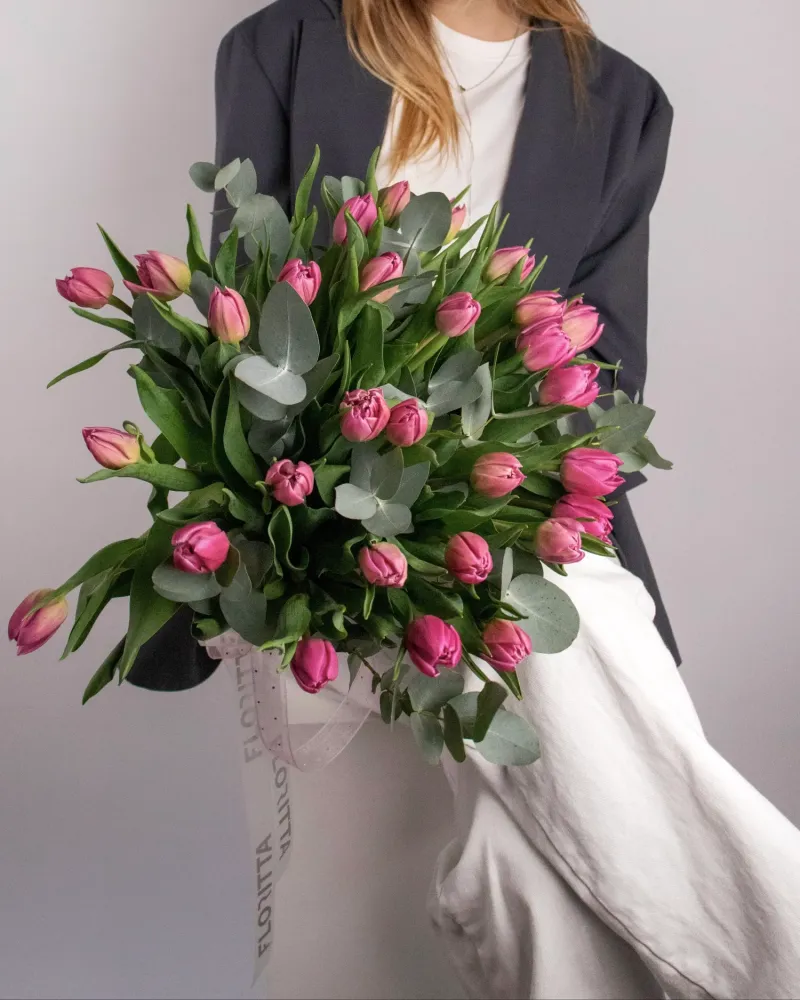
Tulips are at their best, ranunculus arrive in the second half of the month and look like a rose with more going on, anemones give you black-centred red and violet that no rose can do, and a bunch of British daffodils has more presence in a February room than almost anything imported. If the point is the gesture and not the specific flower, this is the one date in the year when the alternatives are better material than the default.
Are British daffodils and tulips at their best in February?
Daffodils, yes — this is their month. The Cornish crop is running hard, Lincolnshire is cropping under cover, and the price and quality are both at their best of the year. Buy them in tight bud, in a bunch on their own, and keep them out of a mixed vase for the first several hours: the sap they leak shortens the life of everything next to them.
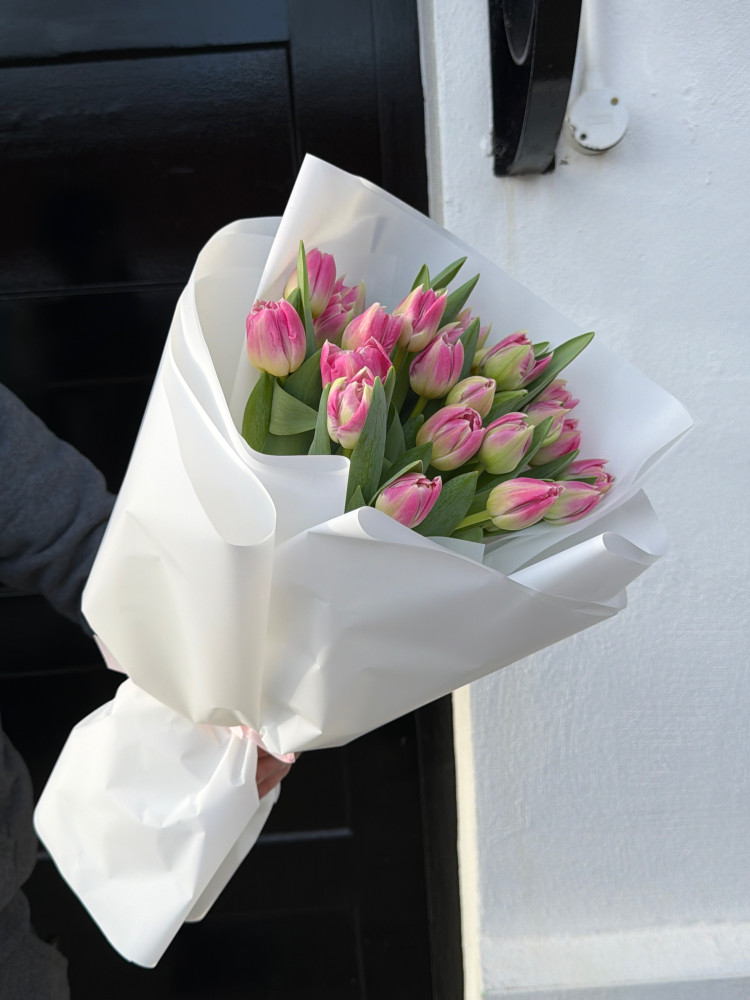
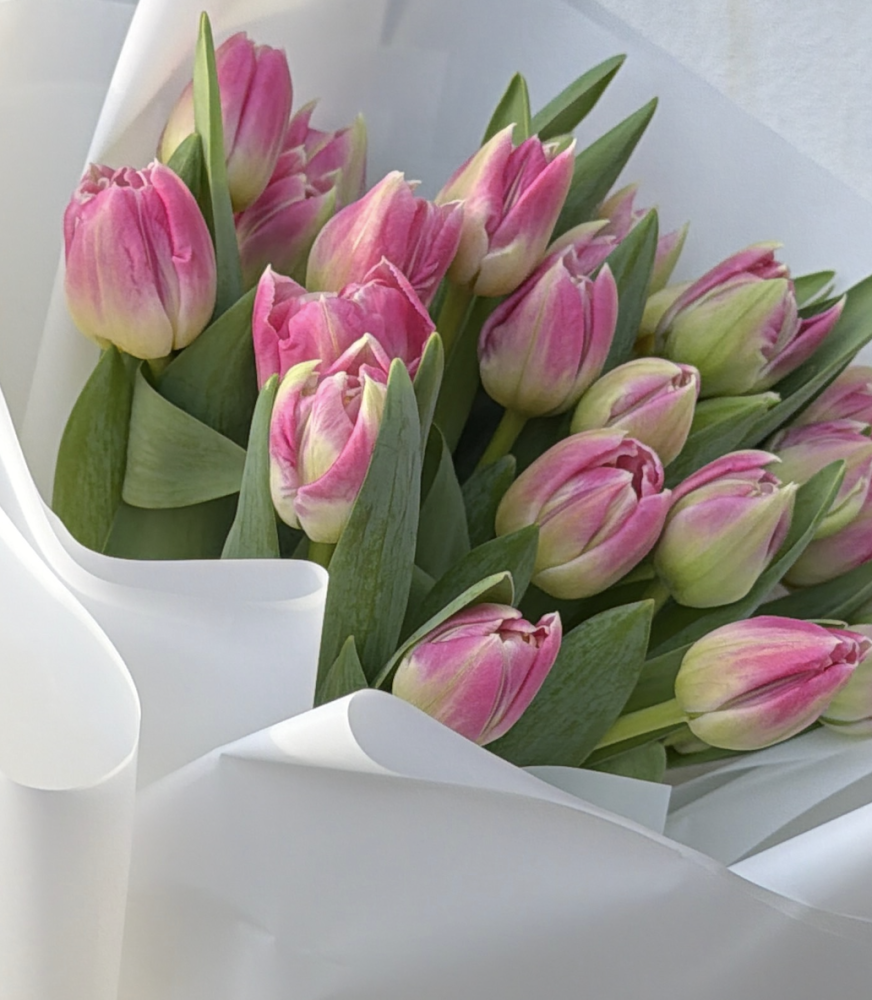
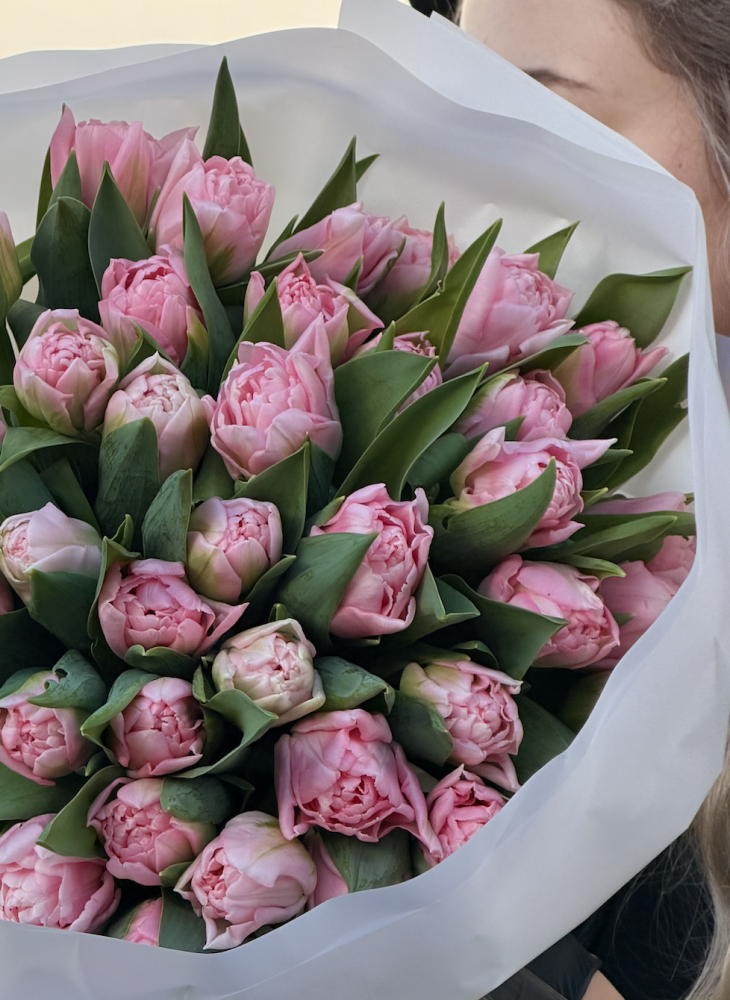
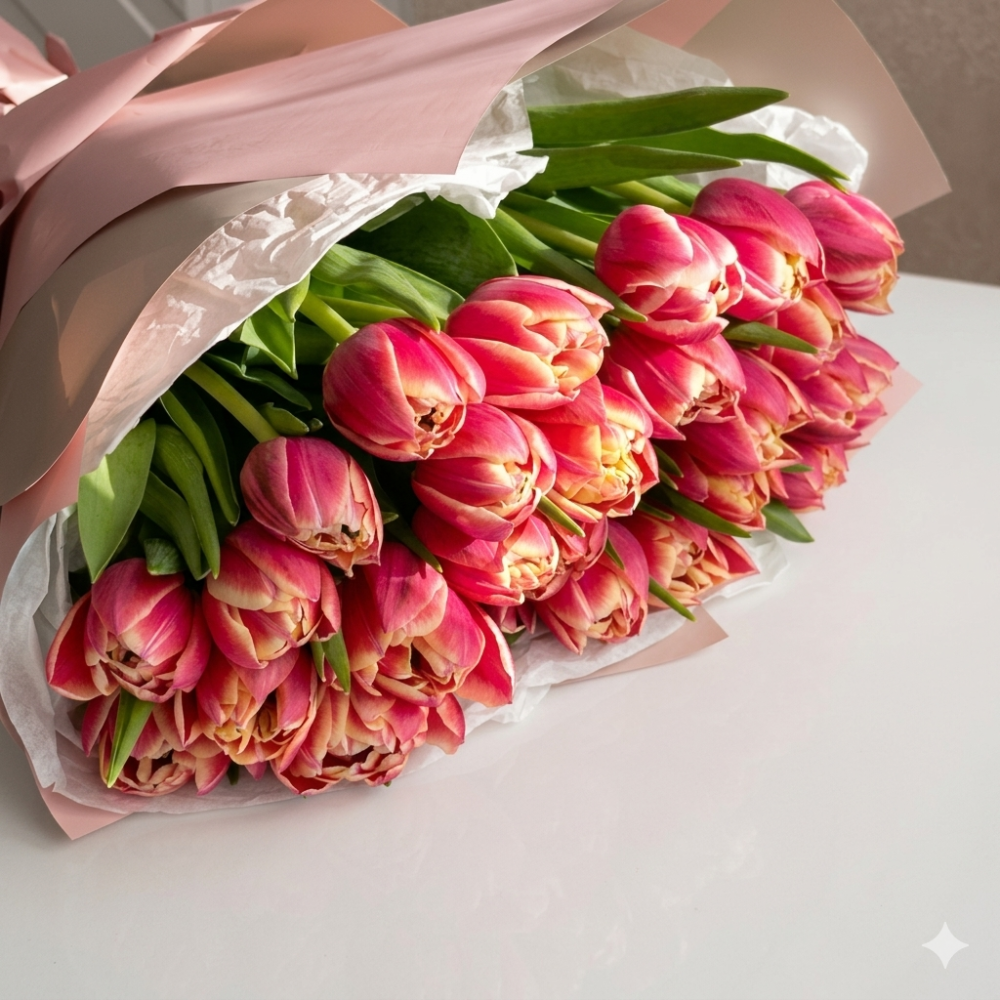
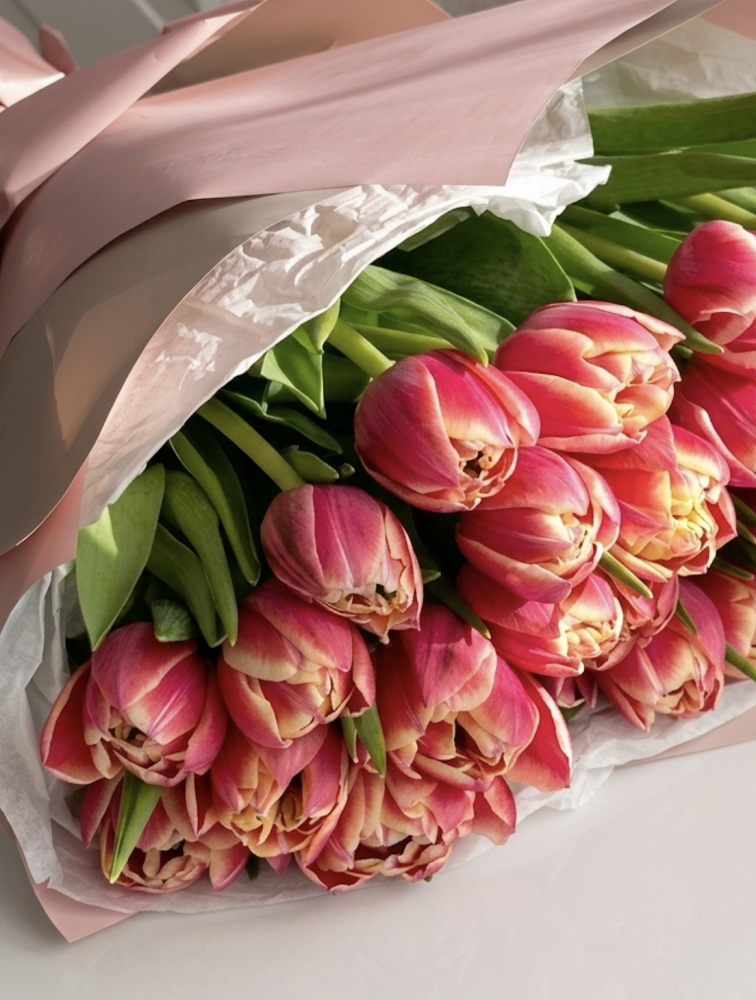
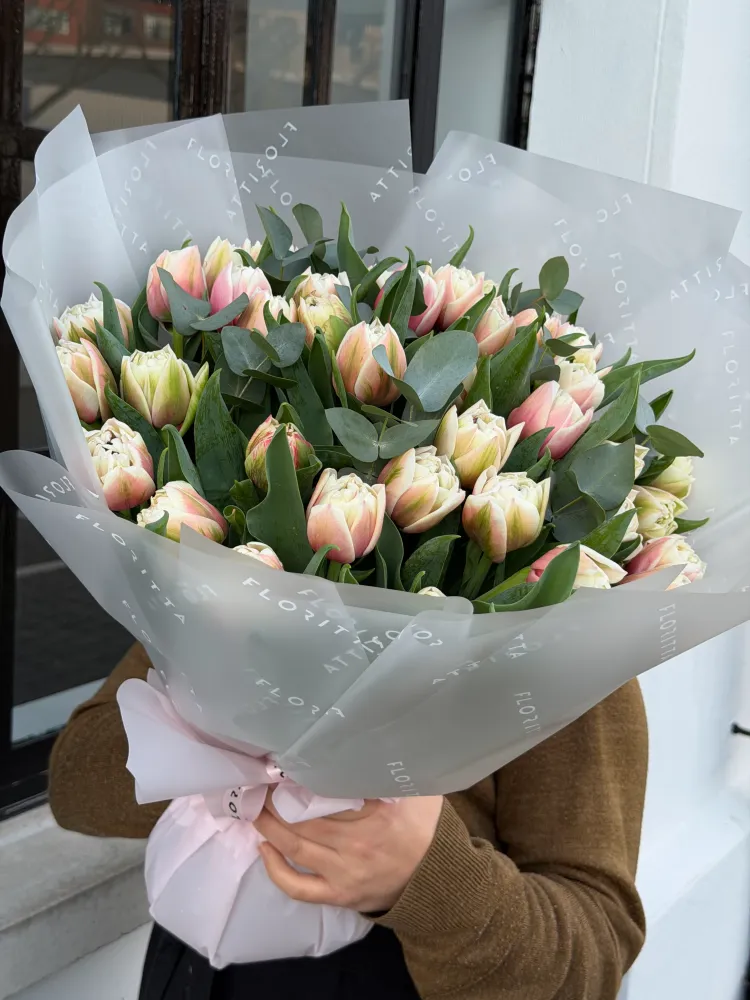
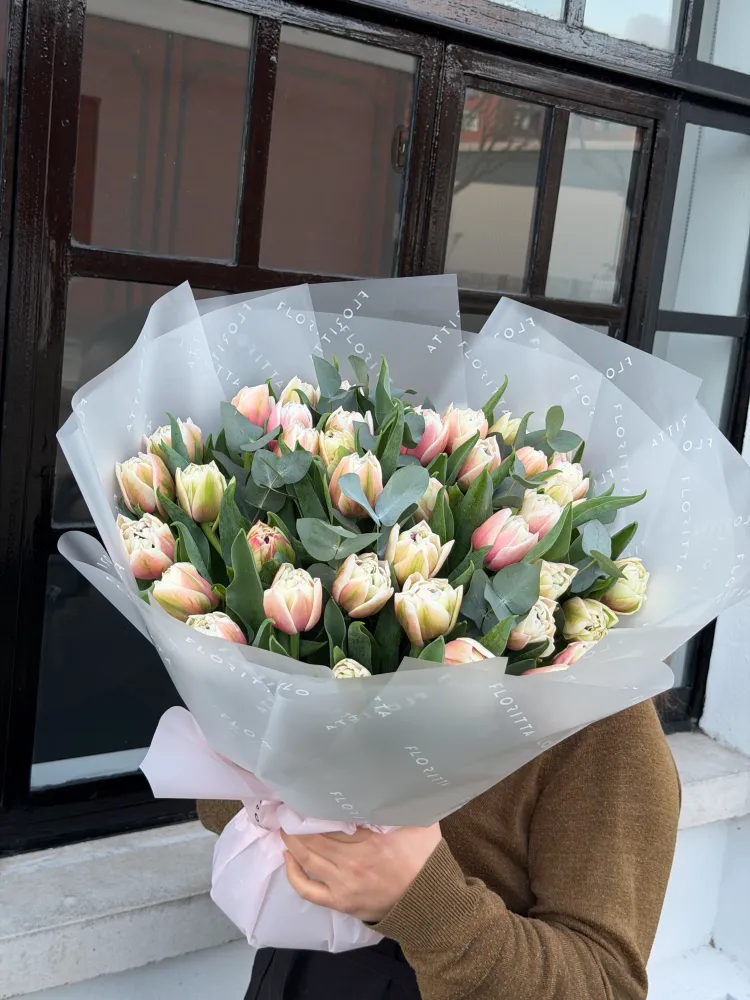
Tulips are building rather than peaking; the British season runs from January to about May, and February is the middle of the forced crop. Expect them to keep growing in the vase after you have arranged them — see tulips. Both are the cheapest genuinely seasonal thing available in the country in February, which is a useful thing to know in the most expensive flower week of the year.
What is mimosa, and when does it arrive?
Mimosa is the small, fluffy, intensely yellow and strongly scented acacia that appears in British shops for about six weeks from the middle of February. It is not British — it comes from the south of France and from Italy, where the season is short and the crop is cut and shipped within a day or two of opening.
It matters in our calendar because it is the flower of the 8th of March across much of Europe, and the demand for it in London tracks that date rather than any British one. It is also the most fragile thing in the shop: mimosa lasts a few days at most, it dries out rather than wilts, and it is best bought for a specific day rather than kept. What we do for that date is in Women's Day flowers.
What is flown in during February?
Roses in enormous volume for the 14th, and then the year-round list — lisianthus, alstroemeria, lilies, gerbera, orchids, chrysanthemums from the Netherlands, and the first European ranunculus and anemones alongside the British ones. Peonies have finished everywhere: the southern-hemisphere season ended in January and the European one does not start until May.
Around the middle of the month the whole import chain is working to a single deadline, which is why lead times on specific varieties are longer in the first two weeks of February than at any other point in the year.
Which February flowers last longest?
Chrysanthemums and carnations, as always. Then alstroemeria, ranunculus, which open slowly and hold for a good week or more, and potted bulbs, which outlast anything cut.
Shortest-lived: mimosa, anemones, and forced blossom, which is beautiful for a few days and then drops. Tulips sit in the middle and behave oddly rather than badly — they stretch, they bend towards the light, and they need a vase tall enough to hold them up. As in January, the heating is the main variable: the figures in how long flowers last assume a cool room, and a warm flat takes several days off every one of them. Potted bulbs and other growing plants are in plants.
When should you order for Valentine's Day and for Mother's Day?
For the 14th of February: order in the first week of the month. This is not a scarcity line — it is that on that one date, every florist in the country is working from stock committed weeks earlier, and a specific variety or a specific delivery window is what runs out first, not flowers in general. We deliver across London seven days a week, same-day on orders placed before 22:00, and that holds on the 14th as well.
Mothering Sunday falls in March in Britain and moves with Easter every year, so check the date before you plan around it; the international date of the 8th of March is fixed and lands separately. Both ranges are ready well before either date — Mother's Day flowers and Women's Day flowers. For the month just gone, see what is in season in January. The month ahead is what is in season in March.