WhatsApp Chat
Short answer: March is the peak of the British flower year's first half. Daffodils are at their cheapest and best, tulips hit their stride, and hyacinths, anemones, ranunculus, muscari, blossom branches and the first alliums are all cut here. It is also the busiest gifting month after February, because Mothering Sunday and the 8th of March land within days of each other.
February gives you the beginning of the British spring. March gives you the whole of it at once. For roughly four weeks the domestic crop is broad enough that an entirely British bouquet stops being a project and becomes the obvious choice, and it happens to coincide with the month when most people in this country buy flowers for their mother.
What is actually in season in the UK in March?
The British list is long by now: narcissi and daffodils in volume, tulips in most colours, hyacinths, anemones, ranunculus, muscari, hellebores, fritillaria, primula, wallflowers, pussy willow and catkins, and blossom branches — blackthorn, cherry, magnolia, forsythia, quince — cut in bud and opened indoors.
What is not here yet: peonies, sweet peas, garden roses, delphiniums, dahlias. Everything with real height and scent in a summer bouquet is still two to four months away, and March flowers are shorter-stemmed and lighter than what you get in June. That is not a shortcoming. It is what a British spring bunch looks like.
Are British daffodils and tulips at their peak in March?
Daffodils, yes, and this is their best month of the year on both quality and price. The Cornish crop that started in January is joined by Lincolnshire and then by growers further north, so the season overlaps and the supply is deep. Buy them in tight bud with the papery sheath still on, and give them a few hours in their own water before they go anywhere near other flowers — the sap they release shortens the life of tulips and roses standing next to them.
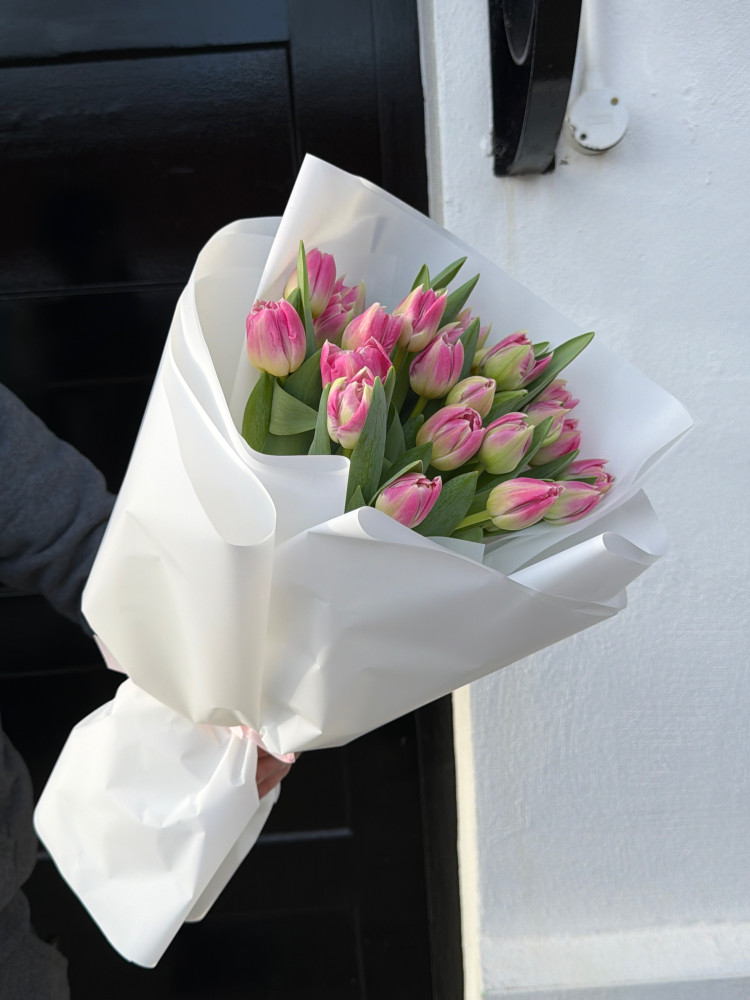
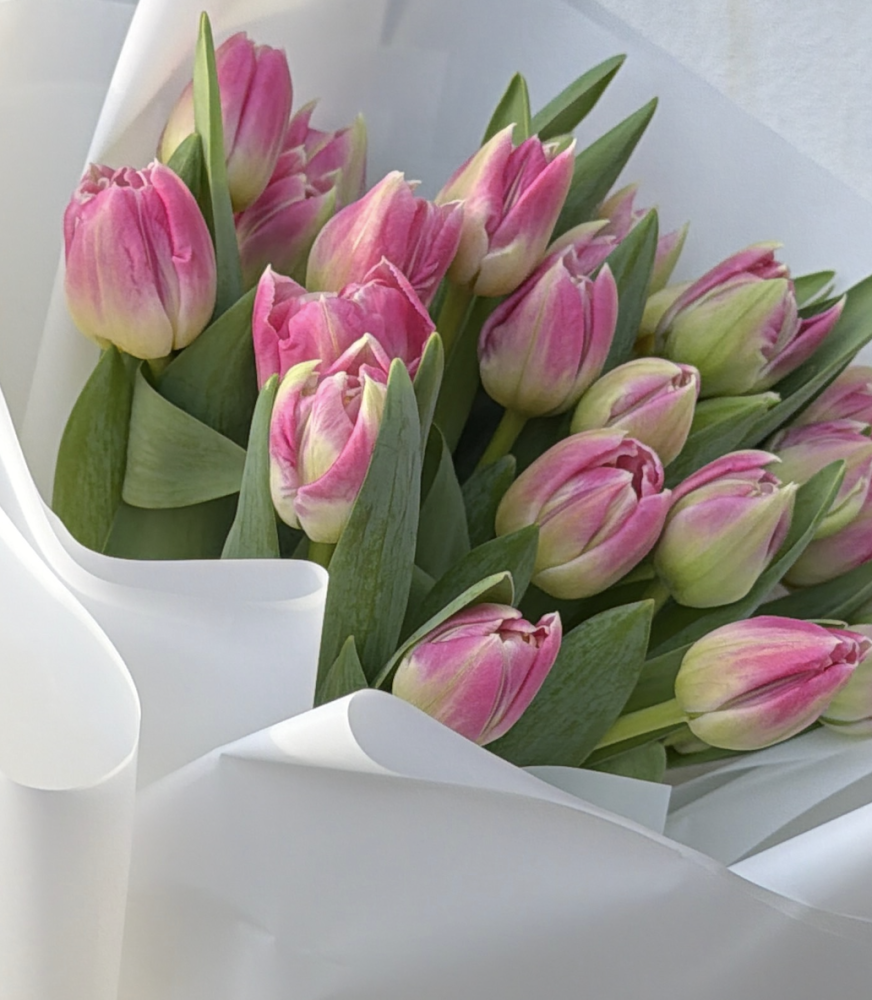
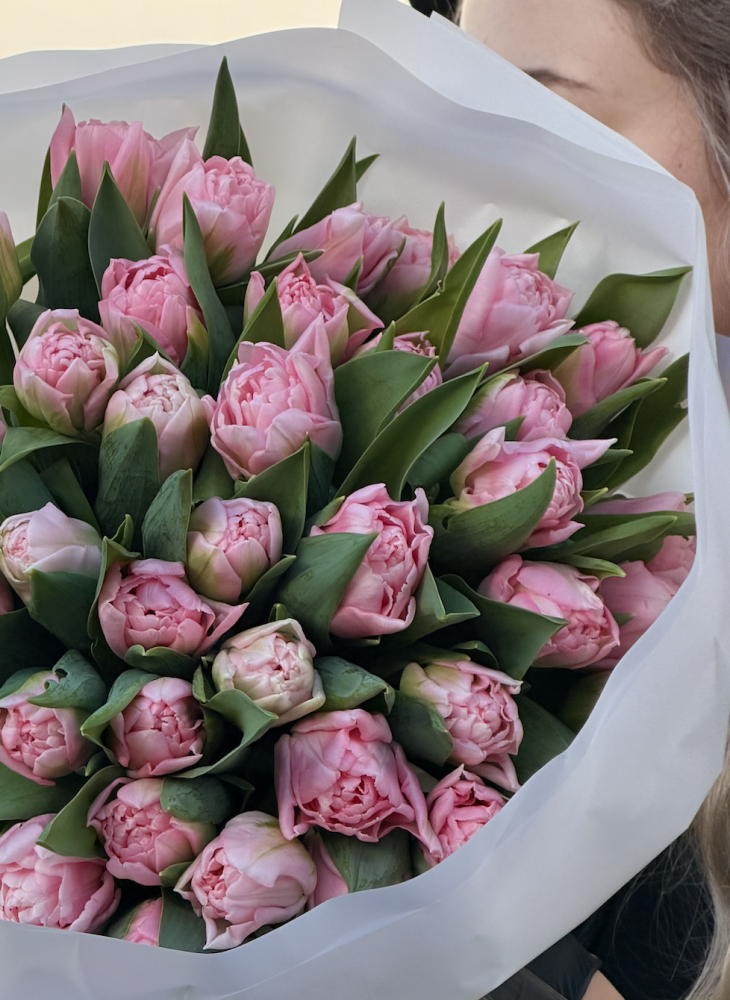
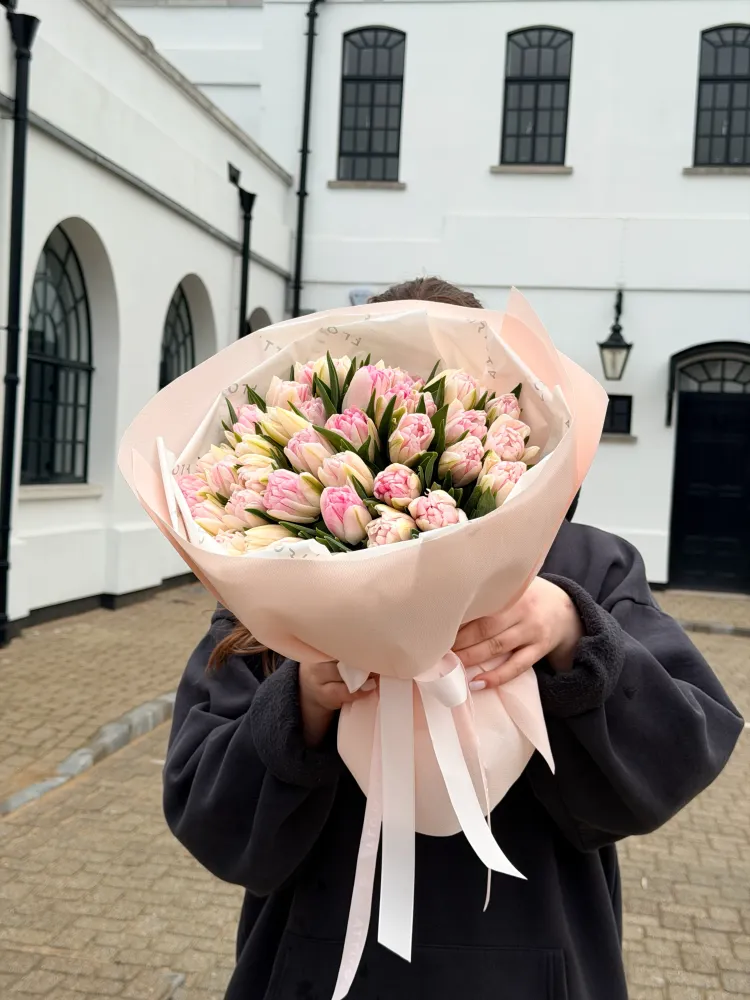
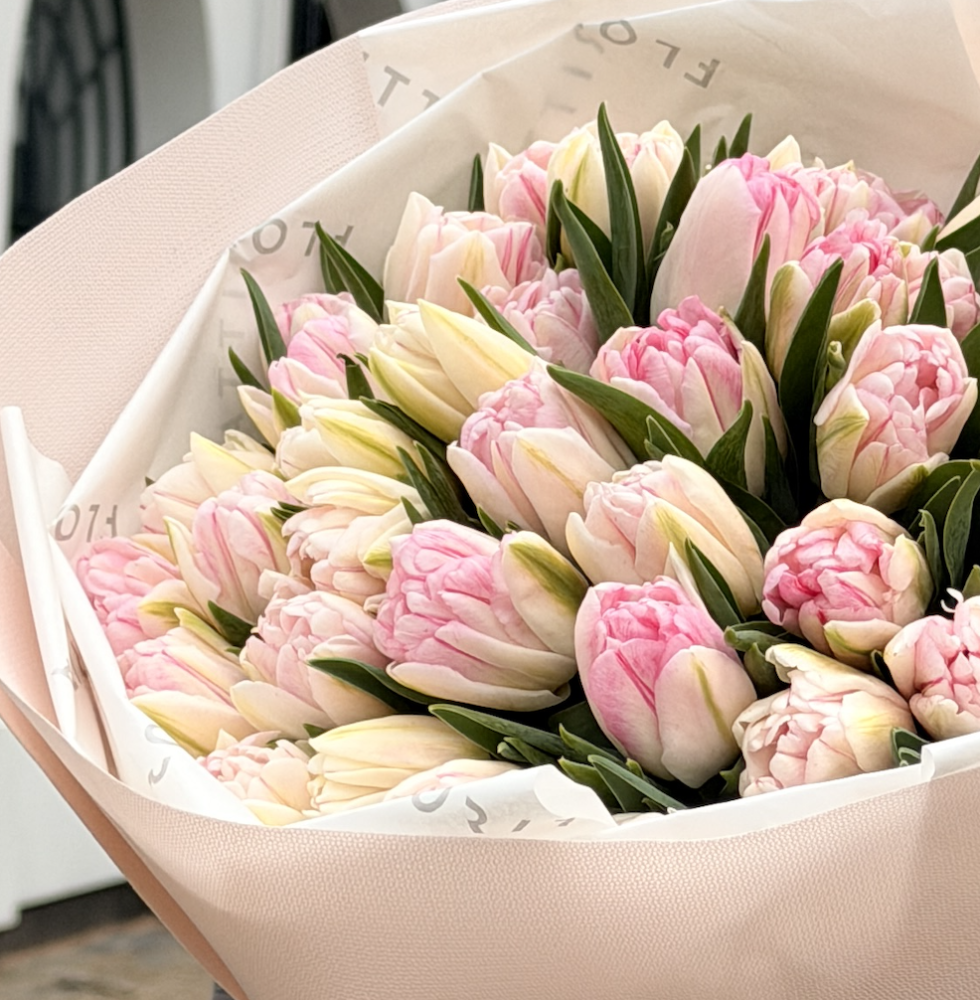
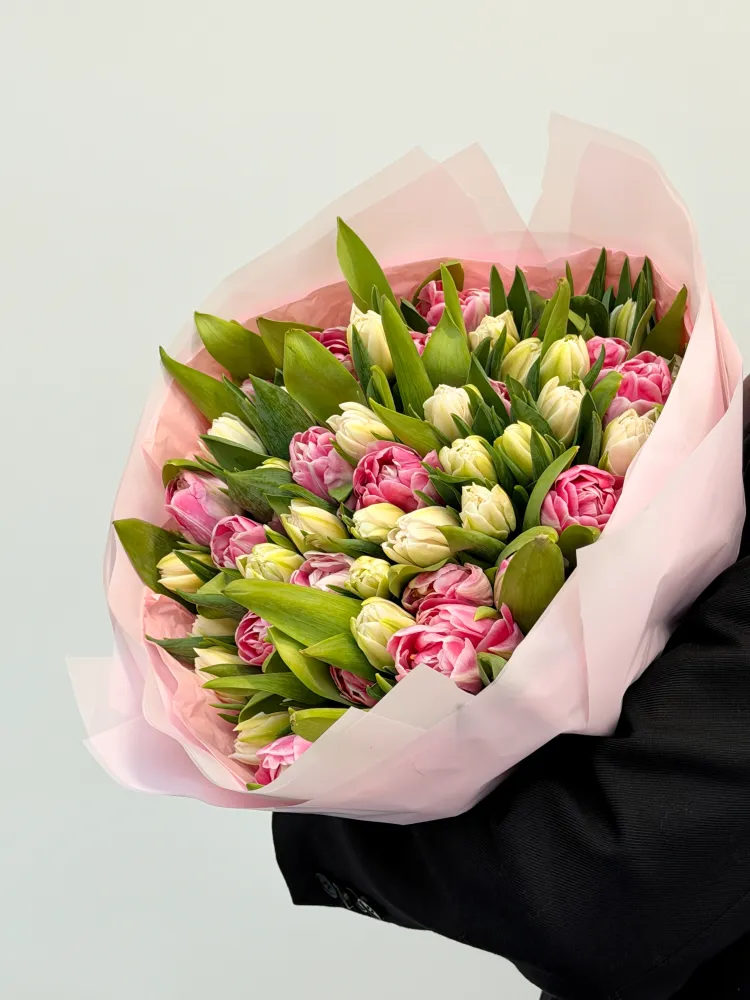
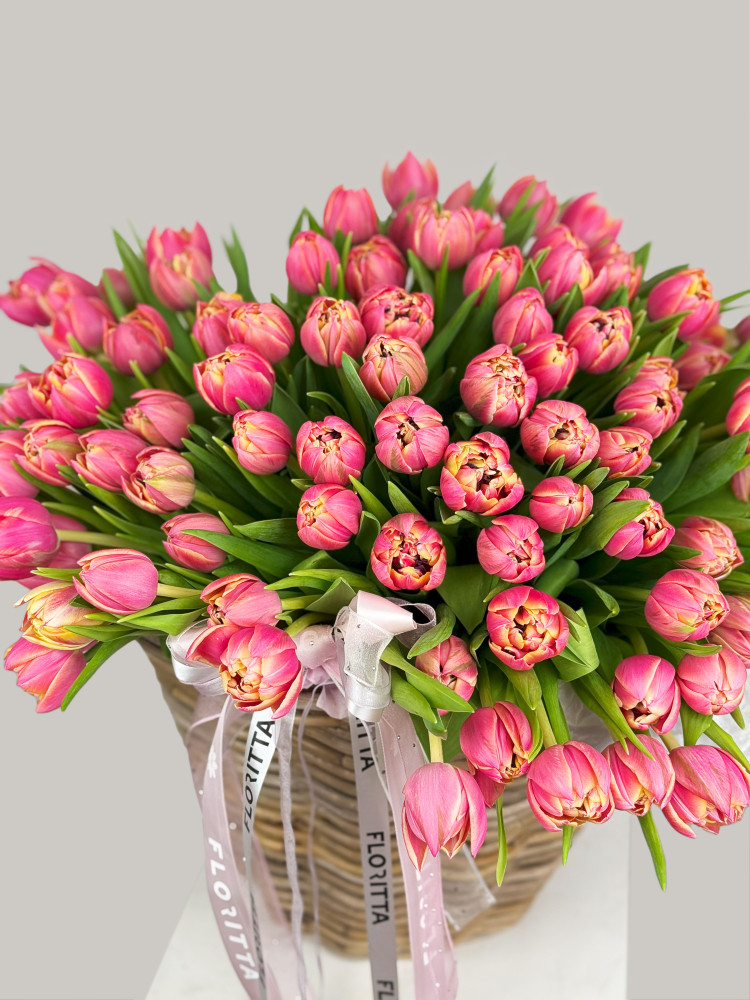
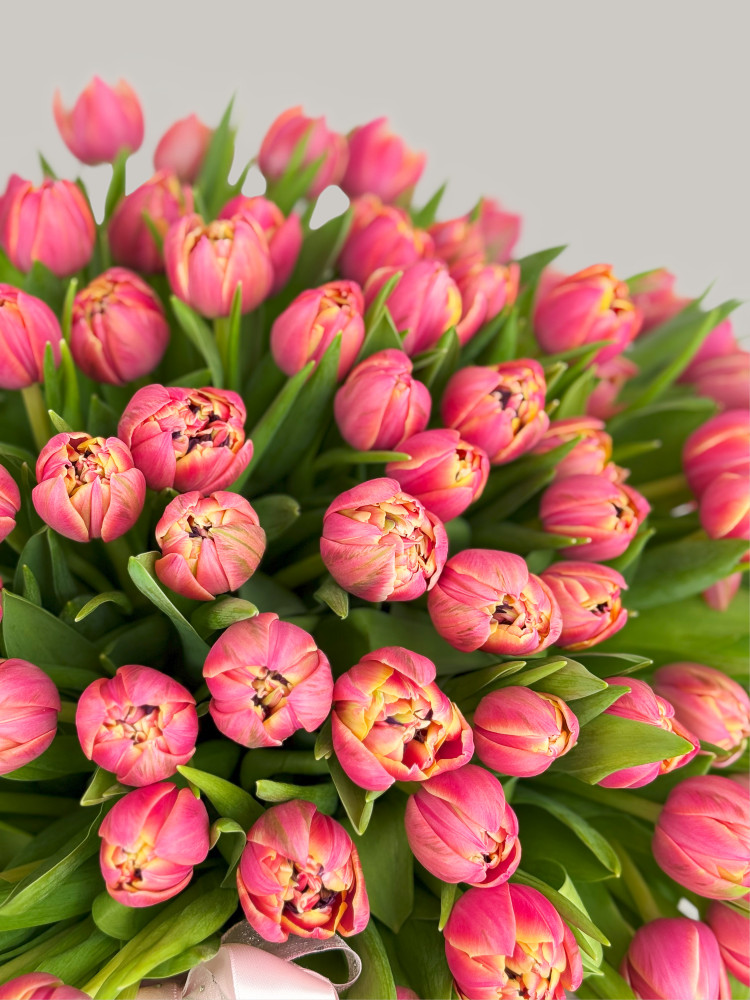
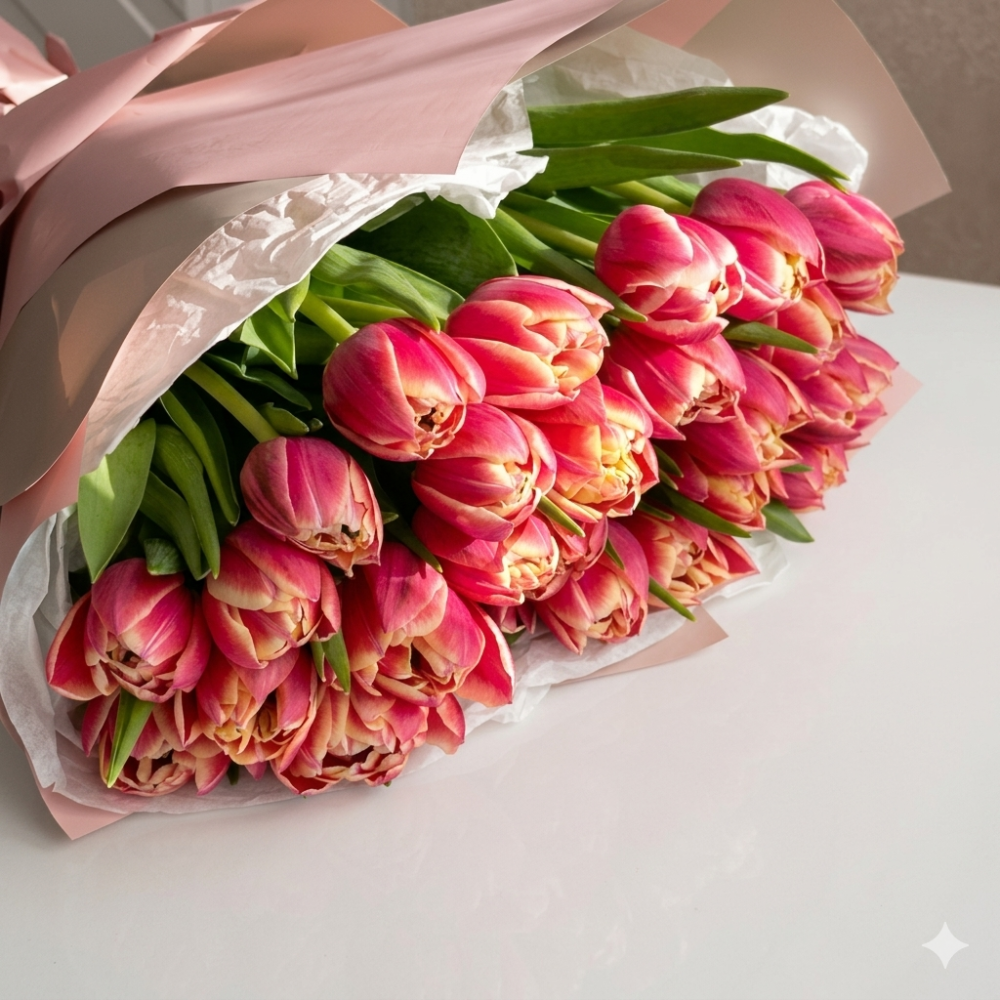
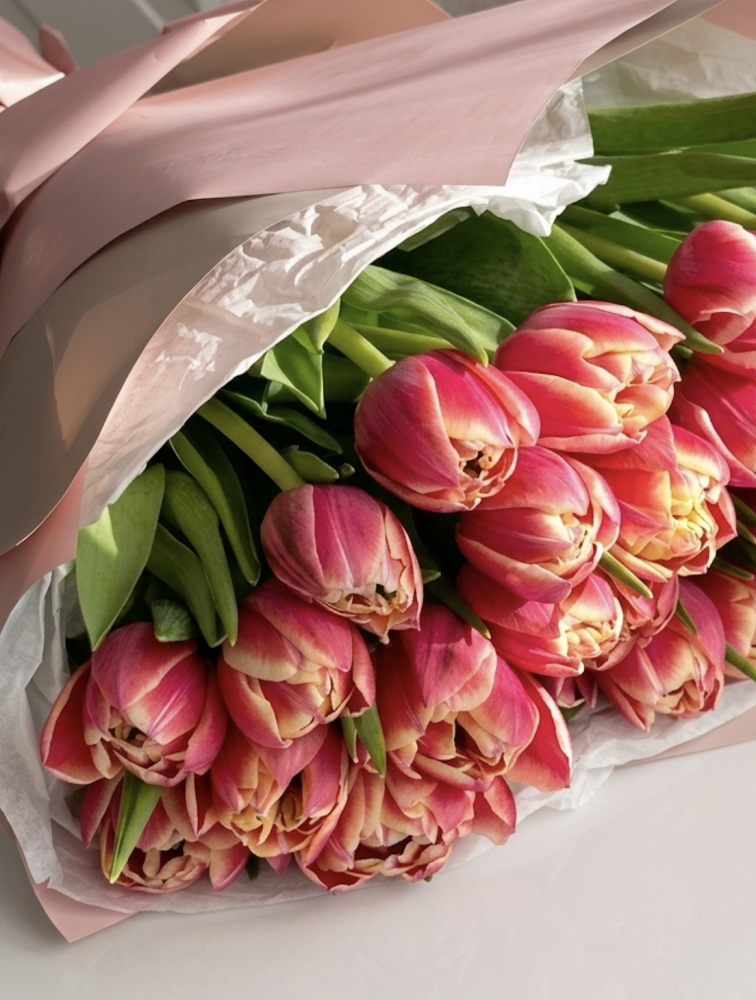
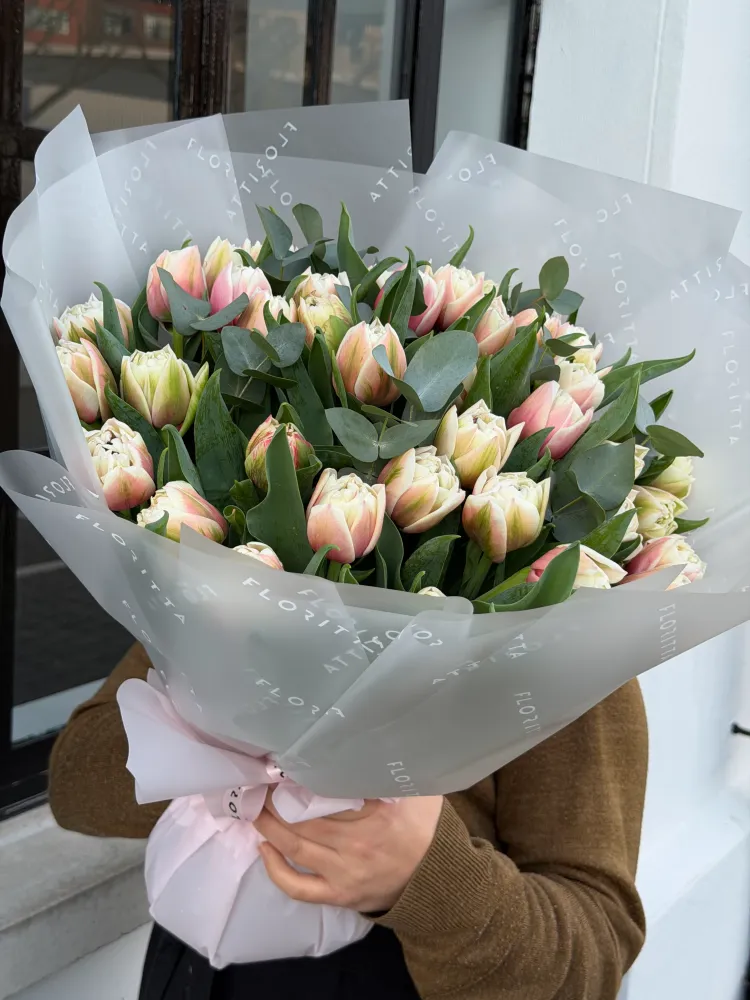
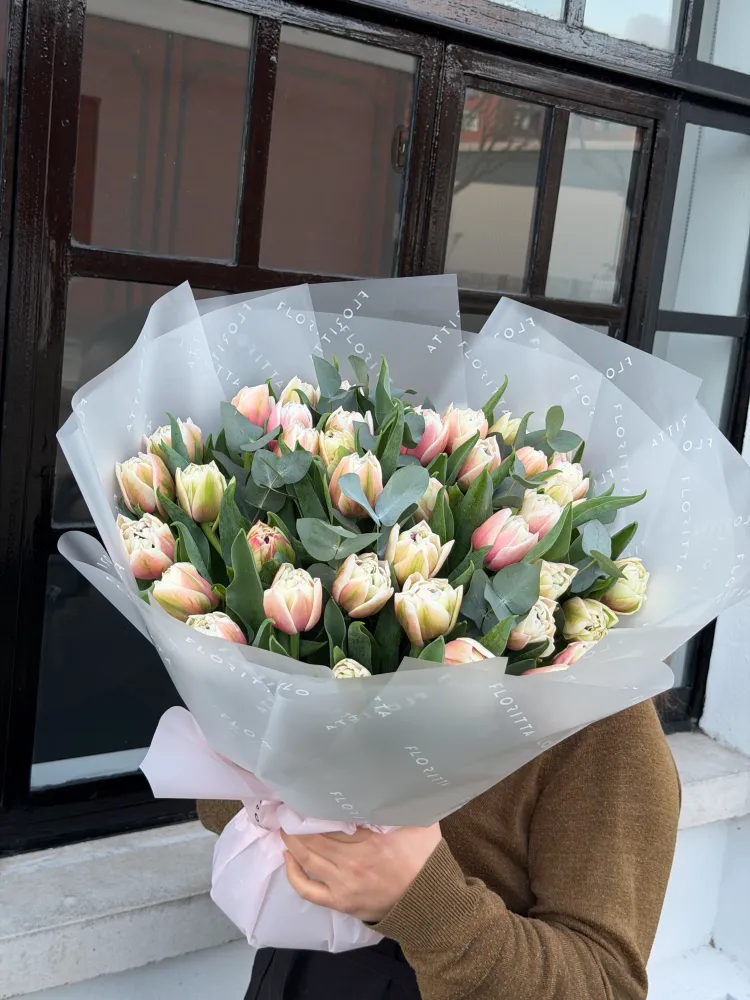
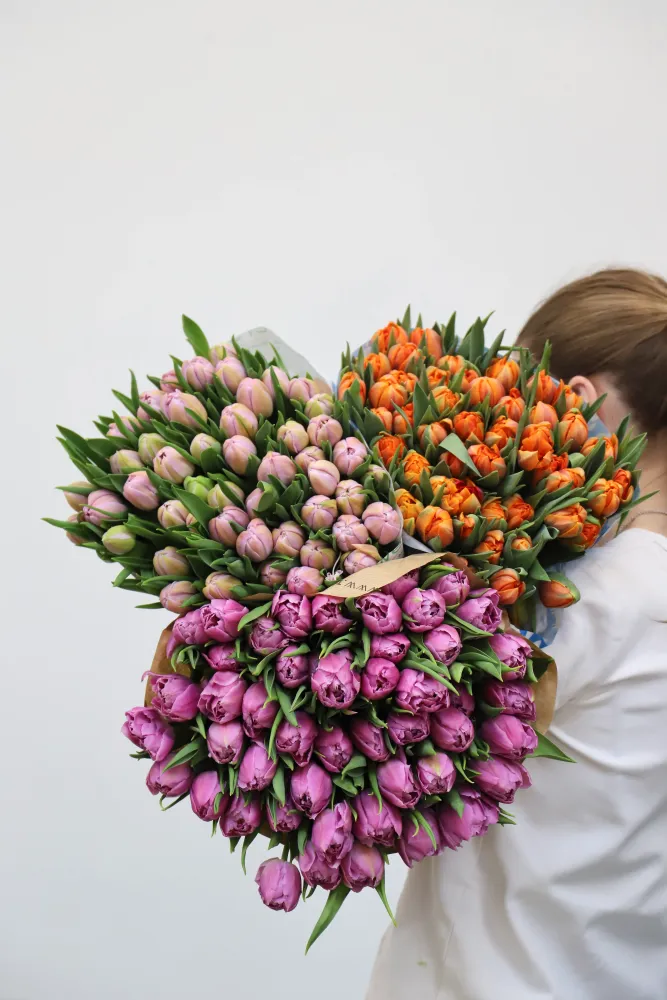
Tulips are at or close to their peak too, and March is the month when British tulips are genuinely competitive with the Dutch ones on both price and freshness. They keep growing after cutting, bend towards the light, and need a vase with enough height to hold them upright — see tulips for what we build with them.
When is Mothering Sunday, and why does it move?
Mothering Sunday in Britain is the fourth Sunday of Lent, which means it is tied to Easter rather than to a fixed date: it falls three weeks before Easter Sunday and can land anywhere from the beginning of March to early April. In 2027, with Easter on the 28th of March, Mothering Sunday is the 7th of March.
This is the single most common date mix-up we see. It is not the American or international Mother's Day in May, and it is not the 8th of March. If you are sending to Britain, check the year's date before you plan around it; the range is in Mother's Day flowers.
What should you send for Mothering Sunday and for the 8th of March?
They are two different occasions that often share a weekend, and the flowers people ask for differ.
For Mothering Sunday the British instinct is seasonal and soft: daffodils, tulips, hyacinths, anemones, a spring garden mix, or a potted bulb that carries on flowering for a fortnight after a cut bunch would have gone. For the 8th of March the reference points are European — mimosa above all, then tulips and roses. Mimosa arrives in London from the south of France and Italy from about mid-February and is usually still around in the first half of March, but it is the most perishable thing in the shop and lasts a few days rather than a week. What we make for that date is in Women's Day flowers.
Is British blossom worth buying as a cut branch?
Yes, with one condition: buy it in bud. Blossom cut in bud and brought into a warm room opens over two or three days and holds for the best part of a week. Blossom bought already open drops within days, sometimes overnight if the room is warm.
March is the month for blackthorn and the earliest cherry, with magnolia following. A single branch in a heavy vase does more for a room than a bouquet three times the price, which is the reason florists keep buying it despite the delivery being awkward and the vase life being short.
What is flown in during March?
The year-round list continues: roses from East Africa and South America, lisianthus, alstroemeria, gerbera, lilies, chrysanthemums and orchids from the Netherlands, plus Italian and Dutch ranunculus and anemones alongside the British ones. Mimosa from France and Italy runs out during the month.
Peonies are still absent, and it is worth being clear about that because March is when people start asking for them. The southern-hemisphere season finished in January, the Israeli and Italian crops begin around mid-April, and British peonies do not start until the end of May — see peonies for when they arrive.
Which March flowers last longest?
Chrysanthemums and carnations, as in every month. Then alstroemeria and ranunculus, which open slowly and hold well over a week, and potted bulbs, which outlast any cut flower in the same money — hyacinths, muscari and small narcissi in a pot go on for two or three weeks and can then go outside. Those are in plants.
Shortest-lived: mimosa, anemones, open blossom, and hellebores, which need their stems seared or scored to drink properly. Daffodils and tulips are in the middle, and both are far more sensitive to warmth than to anything else you do to them. The figures in how long flowers last assume a cool room; a flat with the heating still on takes days off every one of them.
When should you order flowers in March?
For Mothering Sunday, order in the week before rather than the day before. It is the second-busiest date of the British flower year after the 14th of February, and what runs out first is not flowers in general but a particular variety and a particular delivery slot. The 8th of March is quieter in Britain but tight on mimosa specifically, since the crop is small and the window is short.
On ordinary March days there is no scarcity at all: we deliver across London seven days a week, take orders until 22:00 for the following day, and same-day delivery within London runs on orders placed by that time. For the month just gone, see what is in season in February, and for the month ahead, what is in season in April. If Easter falls late in the year you are reading this, the range is in Easter flowers.